Press Room

News / Jul 15, 2022

Covid-19 / Coronavirus

Stay updated with the latest information on Covid-19

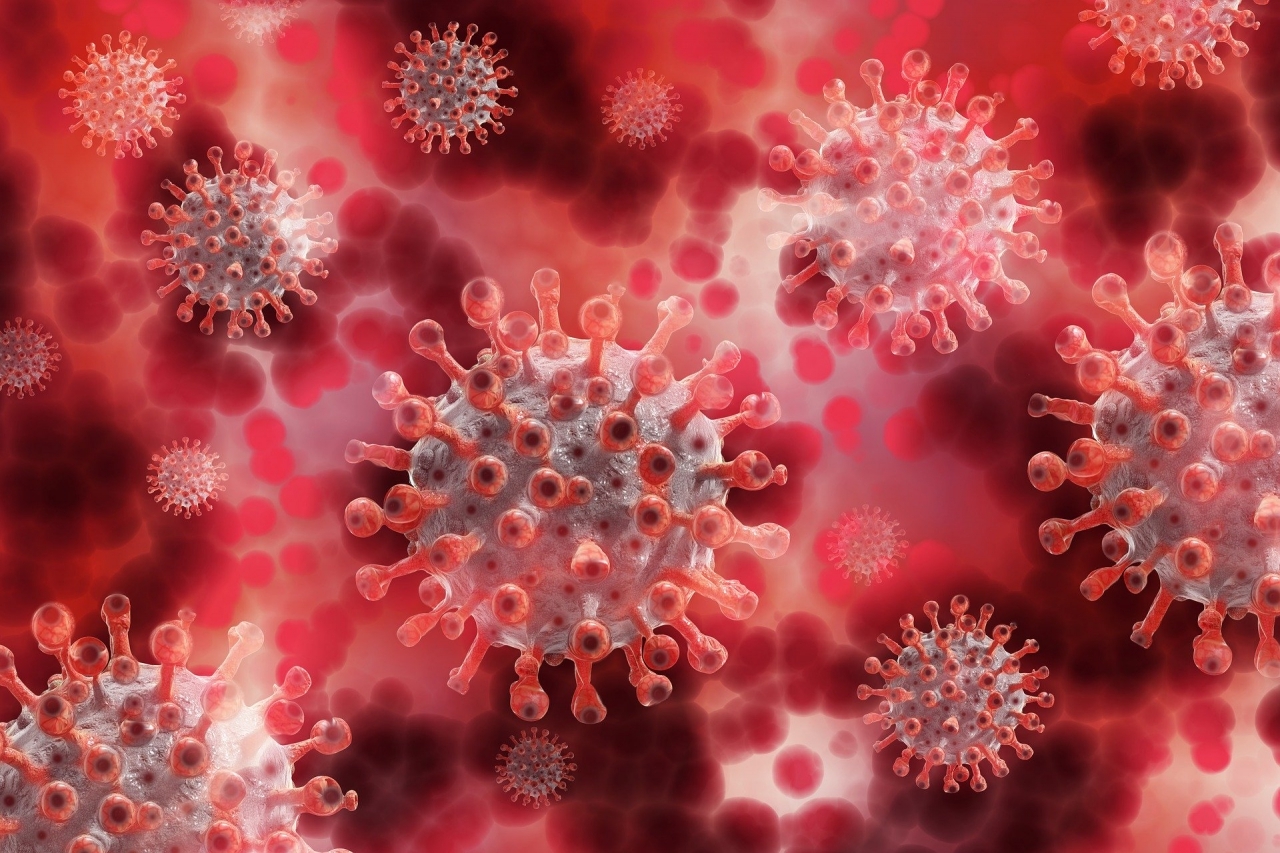
3d image of coronavirus with red background

Video - We are the Second Line of Defense

To watch the video with subtitles, choose your language:  PT  |  CN  |  EN


English


SARS-CoV-2: What & How

Question: What is a virus?

Answer: A virus is not a bacteria. A virus is a microorganism that causes damage in the body by invading cells (these cells are called hosts). Unlike bacteria, all viruses cause disease.


Question: What is the difference between a virus and a bacterium?

Answer: Both bacteria and viruses are microorganisms. But think of it this way: an elephant and a rat are completely different but they’re both animals. Same goes for the virus and bacteria.

Additionally, one of the biggest differences between bacteria and viruses, is their size. A bacterium is the size of a large orange, in comparison to a virus which would be the size of an apple seed.


Question: How is Covid-19 transmitted?

Answer: The main route of transmission is through respiratory droplets. We expel these when we sneeze, cough or even when we talk! Another common route includes touching surfaces that have the virus and then touching your face (before washing your hands).

Find more in this article published in Elsevier


Question: Can a virus live on non-living surfaces?

Answer: Yes. Although viruses live off of other organisms, such as animals or plants, they can be found on non-living surfaces. However, a virus cannot survive for a very long time on non-living surfaces.

Find more on The New England Journal of Medicine


Question: How long does the virus last on surfaces?

Answer:     

  • Food: no evidence to suggest it spreads through food
  • Paper: from a few minutes up to 5 days
  • Cardboard: ~ 24 hours
  • Wood: ~ 4 days
  • Plastic: ~ 2/3 days
  • Metals:  ~ 5 days
  • Steel: ~ 2/3 days


The overall survival rate of the virus on surfaces may vary slightly according to the amount of sunlight and humidity the virus gets exposed to.

Find more on The New England Journal of Medicine


Question: Will warm weather stop the outbreak of Covid-19?

Answer: It is not yet known whether weather and temperature affect the spread of Covid-19. Some other viruses, like those that cause the common cold and flu, spread more during cold weather months but that does not mean it is impossible to become sick with these viruses during other months.  There is much more to learn about the transmissibility, severity, and other features associated with Covid-19 and investigations are ongoing.

Find more at CDC.gov


Question: Can someone who has been quarantined for Covid-19 spread the illness to others?

Answer: Quarantine means separating a person or group of people who have been exposed to a contagious disease but have not developed illness (symptoms) from others who have not been exposed, in order to prevent the possible spread of that disease. Quarantine is usually established for the incubation period of the communicable disease, which is the span of time during which people have developed illness after exposure. For Covid-19, the period of quarantine is 14 days from the last date of exposure because the incubation period for this virus is 2 to 14 days. Someone who has been released from Covid-19 quarantine is not considered a risk for spreading the virus to others because they have not developed illness during the incubation period.

Find more at CDC.gov


Question: How does Covid-19 affect our cells?

Answer: Covid-19 is particularly good at sticking to respiratory tissue. This means attaching to cells found mainly in the lungs. The virus does this by using its crown-like spikes which are attached to the virus’ envelope. As a result, one virus particle can attach itself to multiple cells in the body.
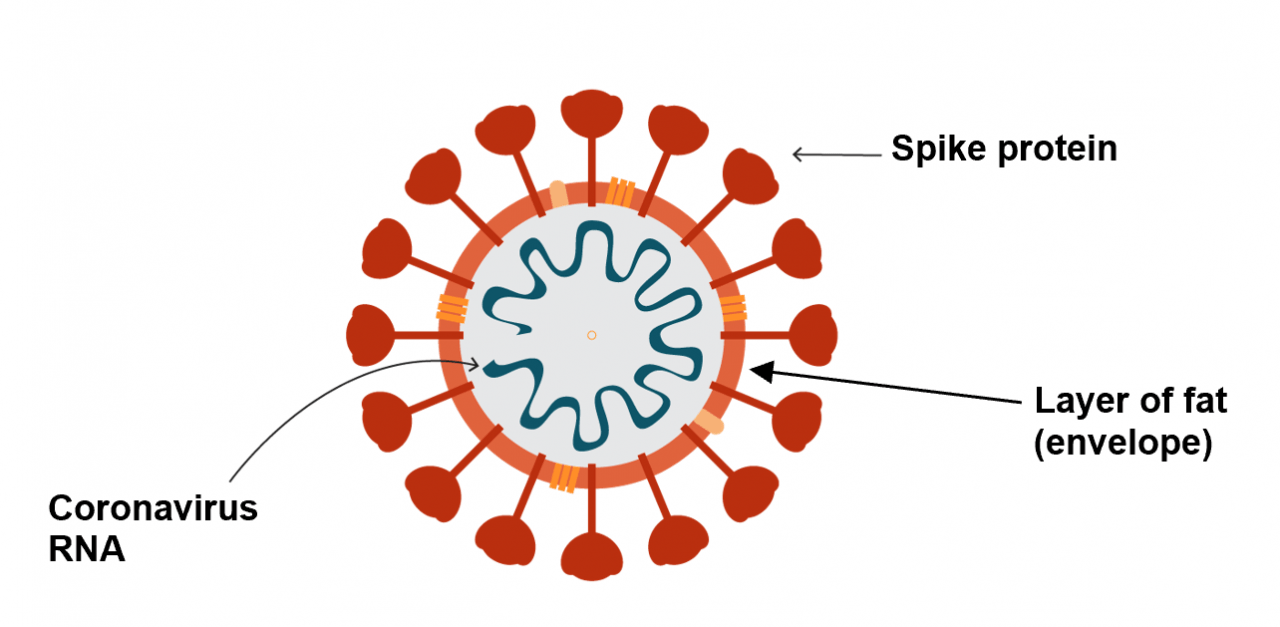


coronavirus composition scheme | Hovione

The easiest paths of entry for the virus are the mouth, nose and eyes. Once the virus manages to attach itself to the host cell, the host cell will take the virus particle in. The virus will then release genetic information called RNA. RNA acts as a set of instructions that tells the host cell what to do. Therefore, RNA will stop a cell from functioning normally, and instead will convert the healthy host cell into a virus making factory. Once the new virus is assembled inside the host cell, it is released into the surroundings, hence causing even further infection in the body.

If our immune system is not effective at fighting the virus and stopping it from spreading onto further cells, more virus-making factories are created in our body using our cells. This eventually kills the host cell, as it is starved by the virus, causing us to have severe respiratory problems, amongst other consequences.


Question: Why do we need to use facemasks?

Answer: Facemasks reduce the distance respiratory particles can travel. This means that it reduces the chances of getting infected by preventing the spread of respiratory droplets. It also acts as a filter to the air you breath in and so prevents you from inhaling the virus.

Find more at CDC.gov


Question: How does washing our hands with soap, get rid of the virus?

Answer: Soap is crucial as it contains chemicals that break down the layer of fat surrounding the coronavirus (envelope) and hence completely destroy it. Using only water doesn’t help because it doesn’t stop the virus from sticking to your hand.

Watch this video to learn how soap kills the coronavirus


Question: Why should you avoid touching your face?

Answer: This is because the virus can easily enter the body through the mouth, nose or even eyes. However, the virus doesn’t enter your body through the skin, as this acts as a physical barrier. 

Find more at CDC.gov


Question: Should I take antibiotics to treat Covid-19 and are anti-bacterial products useful?

Answer: Antibiotics are not designed to stop viral infections and therefore are of no use when trying to treat Covid-19. As explained above, bacteria and viruses are two very different microorganisms. This means that anti-bacterial products are not useful either, for when disinfecting surfaces from Covid-19. Instead you should use disinfectant or alcohol.


Question: Is the virus’ ability to spread affected by the climate?

Answer: So far there is no scientific evidence to suggest or prove that the virus is less effective at spreading in hot or humid weather.


Question: What are the symptoms of Covid-19?

Answer:  People with Covid-19 have had a wide range of symptoms reported – ranging from mild symptoms to severe illness. Symptoms may appear 2-14 days after exposure to the virus. People with these symptoms may have Covid-19:

  • Fever or chills
  • Cough
  • Shortness of breath or difficulty breathing
  • Fatigue
  • Muscle or body aches
  • Headache
  • New loss of taste or smell
  • Sore throat
  • Congestion or runny nose
  • Nausea or vomiting
  • Diarrhea

This list does not include all possible symptoms. CDC will continue to update this list as we learn more about Covid-19.

Find more at CDC.gov


Question: Can someone test negative and later positive on a viral test for Covid-19?

Answer:  Yes, it is possible. You may test negative if the sample was collected early in your infection and test positive later during this illness. You could also be exposed immune to Covid-19 after the test and get infected then. Even if you test negative, you still should take steps to protect yourself and others. See Testing for Current Infection for more information.

Find more at CDC.gov


Question: If I have recovered from Covid-19, will I be immune to it?

Answer: We do not know yet if people who recover from Covid-19 can get infected again. CDC and partners are investigating to determine if a person can get sick with Covid-19 more than once. Until we know more, continue to take steps to protect yourself and others.

Find more at CDC.gov


Question: Who is at higher risk for serious illness from Covid-19?

Answer: COVID-19 is a new disease and there is limited information regarding risk factors for severe disease. Based on currently available information and clinical expertise, older adults and people of any age who have serious underlying medical conditions might be at higher risk for severe illness from Covid-19.

Based on what we know now, those at high-risk for severe illness from Covid-19 are:

  • People aged 65 years and older
  • People who live in a nursing home or long-term care facility
  • People of all ages with underlying medical conditions, particularly if not well controlled, including:
  • People with chronic lung disease or moderate to severe asthma
  • People who have serious heart conditions
  • People who are immunocompromised

Many conditions can cause a person to be immunocompromised, including cancer treatment, smoking, bone marrow or organ transplantation, immune deficiencies, poorly controlled HIV or AIDS, and prolonged use of corticosteroids and other immune weakening medications

  • People with severe obesity (body mass index [BMI] ≥40)
  • People with diabetes
  • People with chronic kidney disease undergoing dialysis
  • People with liver disease

Find more at CDC.gov


Question: What should people at higher risk of serious illness with Covid-19 do?

Answer: If you are at higher risk of getting very sick from Covid-19, you should:

  • Stock up on supplies
  • Take everyday precautions to keep space between yourself and others
  • When you go out in public, keep away from others who are sick
  • Limit close contact and wash your hands often
  • Avoid crowds, cruise travel, and non-essential travel

If there is an outbreak in your community, stay home as much as possible. Watch for symptoms and emergency signs. If you get sick, stay home and call your doctor. More information on how to prepare, what to do if you get sick, and how communities and caregivers can support those at higher risk is available on People at Risk for Serious Illness from COVID-19.

Find more at CDC.gov


Useful links


Relevant Information

Hovione Practical Handbook - Covid-19
The Coronavirus Prevention Handbook
Spanish Flu book chapter

Novel Coronavirus Pneumonia Diagnosis and Treatment Plan (Provisional 6th Edition)

At the time this was the best informed source on the Novel Coronavirus is probably

PRC’s Novel Coronavirus Pneumonia Diagnosis and Treatment Plan (Provisional 6th Edition).

This is an unofficial google translated version of the document (6th version)

Report from WHO panel of international experts that just returned from a fact-finding mission to China – (25 February 2020)

WHO-2019-nCoV-IPC - Water, sanitation, hygiene, and waste management for the COVID-19 virus

EN - The WHO informs that in order to sanitize surface areas you can use a mixture of 0,5% of bleach (sodium hypochlorite) in water. Bleach bottles for household use indicate the concentration percentage in their labels - a bottle from Continente supermarket, for instance, indicates 5% - therefore to use this product to sanitize an area you need to dissolve it in water - one measuring cup of bleach for nine measuring cups of water will provide you with a solution containing 0,5% bleach. Be extremely careful when handling bleach with a 5% concentration. It can burn the skin. If it spills drops to the skin or eyes wash them immediately with abundant water for two minutes. 

WHO-recommended Handrub Formulations


Rate of growth of COVID-19

SARS-Cov-2 Report - 30 November 2021


Hovione Crisis Response

COVID-19 - Hovione Crisis Response
COVID-19 Preparedness Response - Countermeasures adopted prior to Chinese New Year at the Hovione Macau plant 


Stakeholders Communiqués

Communication of Site Shutdown - Hovione Macau 15 July 2022
16th Stakeholder Communiqué Covid-19 11 May 2021
15th Stakeholder Communiqué Covid-19 12 March 2021
14th Stakeholder Communiqué Covid-19 5 February 2021
13th Stakeholder Communiqué Covid-19 12 January 2021
12th Stakeholder Communiqué Covid-19 7 December 2020
11th Stakeholder Communiqué Covid-19 5 November 2020
10th Stakeholder Communiqué Covid-19 8 October 2020
9th Stakeholder Communiqué - Covid-19 2 September 2020
8th Stakeholder Communiqué - Covid-19 12 August 2020
7th External Stakeholder Communiqué - Covid-19 9 July 2020
6th External Stakeholder Communiqué - Covid-19 8 June 2020
5th External Stakeholder Communiqué - Covid-19 6 May 2020
Covid-19 FAQ 20 April 2020
4th External Stakeholder Communiqué - Covid-19 3 April 2020

Covid-19 - An update from Hovione's CEO

20 March 2020

3rd External Stakeholder Communiqué - Covid-19

13 March 2020

2nd External Stakeholder Communiqué - Covid-19

12 February 2020

1st External Stakeholder Communiqué - Coronavirus 2019-NCoV

31 January 2020


Webinar


Webinar Presentation

Sharing our Covid-19 experience. Seeking Feedback
14 July 2020


Service Providers and External Visitors

Guidance Protocol for External Visitors


Contingency Plan - Covid-19


Videos

We are the Second Line of Defense (27 April 2020)

To watch the video with subtitles, choose your language:  PT  |  CN  |  EN


Message from Élie Vannier, Chairman of the Board of Directors (30 July 2020)

Language: English and subtitles in Portuguese


Return From Home Rules (7 July 2020)


Message from Filipe Gaspar, Chief Technology Officer (7 April 2020)

Language: Portuguese and subtitles in English


Message from Tiago Ferreira de Matos, General Counsel (31 March 2020)

Language: Portuguese and subtitles in English


Guy Villax message - Washing hands (25 March 2020)


Message from Eddy Leong, Site Manager - Macao (23 March 2020)


What can people do to protect themselves and others from getting the new coronavirus

Source: WHO, World Health Organization


WHO: How to handwash? With soap and water

Source: WHO, World Health Organization


Can masks protect against the new coronavirus infection?

Source: WHO, World Health Organization


Certifications



APCER Covid Safe Verified | Hovione

As a result of a joint effort between Hovione and Gertal, Sete Casas and Lumiar Canteens have been certified by APCER with the “Covid Safe Verified” seal.

“Covid Safe” is a brand developed by APCER that certifies compliance with the new health and safety rules, in the context of the Covid-19 pandemic. This certification is the recognition of the concern of both Hovione and Gertal in complying with the rules established and providing the best safety conditions for our Team Members.


ABC Covid-19 (for schools)

ABC Covid-19 initiative aims to help schools across the country in their return to classes in a practical, direct, and efficient way, by providing support to answer the various difficulties they face in their daily routines.

The team is composed of trainees and is supervised by the Covid-19 prevention team at Hovione and their aim is to inform students about what are good habits to adopt and how to prevent risks while also supporting teachers and staff with up-to-date, reliable and clear information.

Here you can find all the information provided in a poster format that you can distribute throughout the school. Portuguese only.

Posters
01. Uso de Máscara A / Uso de Máscara
02. Uso de Máscara B 
03. Retirar a Máscara
04. Regras para sair de casa
05. Recomendações
06. Proteção Covid-19
07. Lave as mãos com frequência
08. Lavagem de mãos / Lavagem de mãos
09. Lavagem de mãos com gel desinfetante
10. Como medir a temperatura
11. Medidas Gerais
12. Medidas Escolas
13. Utilização de Líxivia (1)
14. Utilização de Líxivia (2)
15. Instruções para Elevadores
16. Distanciamento Social
17. Desinfetar Superfícies


Follow us:

facebook logo | Hovione


instagram logo | Hovione


Twitter Logo | Hovione


Youtube Logo | Hovione


17-year arts student wins ABCovid contest

Tomás Oliveira, aged 17, from Escola Artística António Arroio, with the video "Covid-19 simplified for morons", which explains simply and graphically why we need a mask to protect ourselves from this virus.

The ABCovid contest is an initiative taken by Hovione trainees aimed at elementary and high school students. For more details visit www.abcovid.pt


Português


SARS-CoV-2: O Quê & Como

Pergunta: O que é um vírus?

Resposta: Um vírus não é uma bactéria. Um vírus é um microrganismo que causa danos ao organismo, invadindo as células (essas células são chamadas de hospedeiros). Ao contrário das bactérias, todos os vírus causam doenças.


Pergunta: Qual é a diferença entre um vírus e uma bactéria?

Resposta: Bactérias e vírus são microrganismos. Mas pense assim: um elefante e um rato são completamente diferentes, mas ambos são animais. O mesmo vale para o vírus e as bactérias.

Além disso, uma das maiores diferenças entre bactérias e vírus é o seu tamanho. Uma bactéria é do tamanho de uma laranja grande, em comparação com um vírus do tamanho de uma semente de maçã.


Pergunta: Como o Covid-19 é transmitido?

Resposta: A principal via de transmissão é através de gotículas respiratórias. Nós os expulsamos quando espirramos, tossimos ou mesmo quando conversamos! Outra rota comum inclui tocar em superfícies com o vírus e depois tocar em seu rosto (antes de lavar as mãos).

Saiba mais neste artigo científico publicado na Elsevier


Pergunta: Um vírus pode viver em superfícies não-vivas?

Resposta: Sim. Embora os vírus vivam de outros organismos, como animais ou plantas, eles podem ser encontrados em superfícies não-vivas. No entanto, um vírus não pode sobreviver por muito tempo em superfícies não-vivas.

Saiba mais neste artigo publicado na The New England Journal of Medicine


Pergunta: Quanto tempo dura o vírus nas superfícies?

Resposta:

  • Comida: nenhuma evidência para sugerir que ela se espalha através da comida
  • Papel: de alguns minutos a 5 dias
  • Papelão: ~ 24 horas
  • Madeira: ~ 4 dias
  • Plástico: ~ 2/3 dias
  • Metais: ~ 5 dias
  • Aço: ~ 2/3 dias

A taxa geral de sobrevivência do vírus nas superfícies pode variar ligeiramente de acordo com a quantidade de luz solar e umidade à qual o vírus é exposto.

Saiba mais neste artigo publicado na The New England Journal of Medicine


Pergunta: O tempo quente vai parar o surto de Covid-19?

Resposta: Ainda não se sabe se o clima e a temperatura afetam a propagação do Covid-19. Alguns outros vírus, como os que causam o resfriado e a gripe comuns, se espalham mais durante os meses de clima frio, mas isso não significa que é impossível ficar doente com esses vírus durante outros meses. Há muito mais para aprender sobre a transmissibilidade, a gravidade e outros recursos associados ao Covid-19 e às investigações em andamento.

Saiba mais no website CDC.gov 


Pergunta: Alguém que foi colocado em quarentena por Covid-19 pode espalhar a doença para outras pessoas?

Resposta: Quarentena significa separar uma pessoa ou grupo de pessoas que foram expostas a uma doença contagiosa, mas não desenvolveram doenças (sintomas) de outras que não foram expostas, a fim de impedir a possível propagação dessa doença. A quarentena é geralmente estabelecida para o período de incubação da doença transmissível, que é o período durante o qual as pessoas desenvolvem doenças após a exposição. Para o COVID-19, o período de quarentena é de 14 dias a partir da última data de exposição, porque o período de incubação desse vírus é de 2 a 14 dias. Alguém que foi liberado da quarentena de COVID-19 não é considerado um risco de espalhar o vírus para outras pessoas porque não desenvolveram doenças durante o período de incubação.

Saiba mais no website CDC.gov


Pergunta: Como o Covid-19 afeta as nossas células?

Resposta: O Covid-19 é particularmente bom em aderir ao tecido respiratório. Isso significa anexar às células encontradas principalmente nos pulmões. O vírus faz isso usando seus picos em forma de coroa, anexados ao envelope do vírus. Como resultado, uma partícula de vírus pode se conectar a várias células do corpo.

Os caminhos mais fáceis de entrada para o vírus são a boca, nariz e olhos. Uma vez que o vírus consiga se conectar à célula hospedeira, a célula hospedeira absorve a partícula do vírus. O vírus libera informações genéticas chamadas RNA. O RNA atua como um conjunto de instruções que informa à célula hospedeira o que fazer. Portanto, o RNA interrompe o funcionamento normal da célula e, em vez disso, converte a célula hospedeira saudável em uma fábrica de criação de vírus. Uma vez que o novo vírus é montado dentro da célula hospedeira, ele é liberado para o ambiente, causando ainda mais infecções no organismo.

Se nosso sistema imunológico não é eficaz no combate ao vírus e impede que ele se espalhe para outras células, mais fábricas de criação de vírus são criadas em nosso corpo, usando nossas células. Isso acaba matando a célula hospedeira, pois ela sofre de fome pelo vírus, causando problemas respiratórios graves, entre outras consequências.


coronavirus composition scheme | Hovione

Pergunta: Por que precisamos usar máscaras?

Resposta: As máscaras faciais reduzem a distância que as partículas respiratórias podem percorrer. Isso significa que reduz as chances de ser infectado, impedindo a propagação de gotículas respiratórias. Também atua como um filtro para o ar que você respira e impede a inalação do vírus.

Saiba mais no website CDC.gov


Pergunta: Como lavar as mãos com sabão elimina o vírus?

Resposta: O sabão é crucial, pois contém produtos químicos que quebram a camada de gordura ao redor do coronavírus (envelope) e, portanto, o destroem completamente. Usar apenas água não ajuda, pois não impede que o vírus grude na sua mão.

Assista a este vídeo para saber como é que o sabão elimina o vírus


Pergunta: Por que você deve evitar tocar no seu rosto?

Resposta: Isso ocorre porque o vírus pode facilmente entrar no corpo pela boca, nariz ou até olhos. No entanto, o vírus não entra no seu corpo através da pele, pois atua como uma barreira física.

Saiba mais no website CDC.gov


Pergunta: Devo tomar antibióticos para tratar o Covid-19 e os produtos antibacterianos são úteis?

Resposta: Os antibióticos não são projetados para interromper infecções virais e, portanto, não são úteis ao tentar tratar o Covid-19. Como explicado acima, bactérias e vírus são dois microorganismos muito diferentes. Isso significa que os produtos antibacterianos também não são úteis, ao desinfetar superfícies do Covid-19. Em vez disso, você deve usar desinfetante ou álcool.


Pergunta: A capacidade do vírus se espalhar é afetada pelo clima?

Resposta: Até o momento, não há evidências científicas para sugerir ou provar que o vírus é menos eficaz na propagação em clima quente ou úmido.


Pergunta: Quais são os sintomas da Covid-19?

Resposta: Pessoas com Covid-19 tiveram uma ampla gama de sintomas relatados - desde sintomas leves a doenças graves. Os sintomas podem aparecer 2-14 dias após a exposição ao vírus. Pessoas com esses sintomas podem ter Covid-19:

  • Febre ou calafrios
  • Tosse
  • Falta de ar ou dificuldade em respirar
  • Fadiga
  • Dores musculares ou corporais
  • Dor de cabeça
  • Nova perda de paladar ou olfato
  • Dor de garganta
  • Congestão ou coriza
  • Náusea ou vômito
  • Diarreia

Esta lista não inclui todos os sintomas possíveis. O CDC continuará a atualizar esta lista à medida que aprendermos mais sobre o Covid-19.

Saiba mais no website CDC.gov


Pergunta: Alguém pode testar negativo e posteriormente positivo num teste viral para o Covid-19?

Resposta: Sim, é possível. Você pode ter um resultado negativo se a amostra foi coletada no início de sua infeção e um resultado positivo mais tarde durante esta doença. Você também pode ser exposto ao Covid-19 imune após o teste e infetado. Mesmo se você testar negativo, você ainda deve tomar medidas para proteger a si e aos outros. Consulte Teste para infecção atual para obter mais informações.

Saiba mais no website CDC.gov


Pergunta: Se eu me recuperei do Covid-19, estarei imune?

Resposta: Ainda não sabemos se as pessoas que se recuperam do Covid-19 de ficar doente com Covid-19 mais de uma vez. Até que saibamos mais, continue a tomar medidas para proteger a si e aos outros.

Saiba mais no website CDC.gov


Pergunta: Quem está em maior risco de doenças graves por causa da Covid-19?

Resposta: Covid-19 é uma doença nova e há informações limitadas sobre fatores de risco para doenças graves. Com base nas informações disponíveis no momento e nos conhecimentos clínicos, idosos e pessoas de qualquer idade com sérias condições médicas subjacentes podem estar em maior risco de doença grave por causa do Covid-19.

Com base no que sabemos agora, aqueles com alto risco de doença grave por Covid-19 são:

  • Pessoas com 65 anos ou mais
  • Pessoas que vivem em um lar de idosos ou em instituições de longa permanência
  • Pessoas de todas as idades com condições médicas subjacentes, principalmente se não forem bem controladas, incluindo:
  • Pessoas com doença pulmonar crônica ou asma moderada a grave
  • Pessoas que têm problemas cardíacos graves
  • Pessoas imunológicas


Links Úteis


Informação Relevante

Manual Prático Colaborador Hovione - Covid-19
Manual para a Prevenção e Tratamento da Covid-19

WHO-2019-nCoV-IPC - Water, sanitation, hygiene, and waste management for the COVID-19 virus

Para desinfectar as superfícies a OMS recomenda uma solução (mistura) de 0,5% de lixívia (hipoclorito de sódio) em água. As embalagens de lixívia para uso doméstico indicam a concentração em % no rótulo - num exemplo do Continente vimos a indicação de 5% - daí que para conseguir ter uma concentração para desinfetar as superfícies com esse produto a 5% é preciso diluir com mais àgua:  a uma medida de lixívia a 5% juntar 9 medidas de água para ter uma solução a 0,5%. Cuidado com a lixívia, em concentrações de 5% ou mais causa queimaduras na pele. Se pingos forem para a pele ou os olhos lave abundantemente com água durante 2 minutos.


Webinar


Apresentação Webinar

Resposta a Covid-19 - Partilha de experiências. Juntos somos mais fortes
16 julho 2020


Prestadores de Serviços

Prestadores de Serviços: Plano de Contingência COVID-19


Regras de Circulação em Instalações Hovione em Sete Casas e Lumiar


Videos

Hovione - Messagem de Élie Vannier, Presidente do Conselho de Administração (30 de julho 2020)

Legendado em Português


ABCovid: Entrevista de Santiago Sampaio no programa Curto Circuito, SIC Radical (13 de julho 2020)

Saber mais sobre o Concurso Nacional ABCovid


Mensagem de Ana Cristina Guimarães, Diretora de RH Portugal (26 de junho de 2020)


Mensagem de Isabel Jonet, Banco Alimentar Contra a Fome (5 de junho 2020)


Regras de Regresso de Casa (28 de maio de 2020)


Regras de Regresso de Casa - Regra 1


Regras de Regresso de Casa - Regra 2


Regras de Regresso de Casa - Regra 3


Regras de Regresso de Casa - Regra 4 e 5


Regras de Regresso de Casa - Regra 6


Regras de Regresso de Casa - Regra 7

Regras de Regresso de Casa - Regra 8


Regras de Regresso de Casa - Regra 9


Regras de Regresso de Casa - Regra 10


Regras de Regresso de Casa - Regra 11


Histórias de Superação (1 de maio de 2020)


Somos a segunda linha de defesa (27 de abril de 2020)

Video disponível com legendas em  CN  |  EN


Mensagem de Filipe Gaspar, Chief Technology Officer (7 de abril de 2020)


Mensagem de Tiago Ferreira de Matos, General Counsel (31 de março de 2020)


Mensagem de Guy Villax - Lavagem de mãos (25 de março de 2020)


Mensagem de Guy Villax a partir da fábrica de Sete Casas em Portugal (19 de março de 2020)


Medidas internas coronavírus com procedimentos à chegada aos nossos sites (6 de março de 2020)


Recomendação de medidas de proteção individual e coletiva na prevenção da infeção com COVID-19

Fonte: DGS, Direção-Geral da Saúde


Prevenção e Proteção

Fonte: DGS, Direção-Geral da Saúde


O novo coronavírus - COVID-19

Fonte: DGS, Direção-Geral da Saúde


Empresas alteram produção para fabricar desinfetantes

Fonte: RTP1
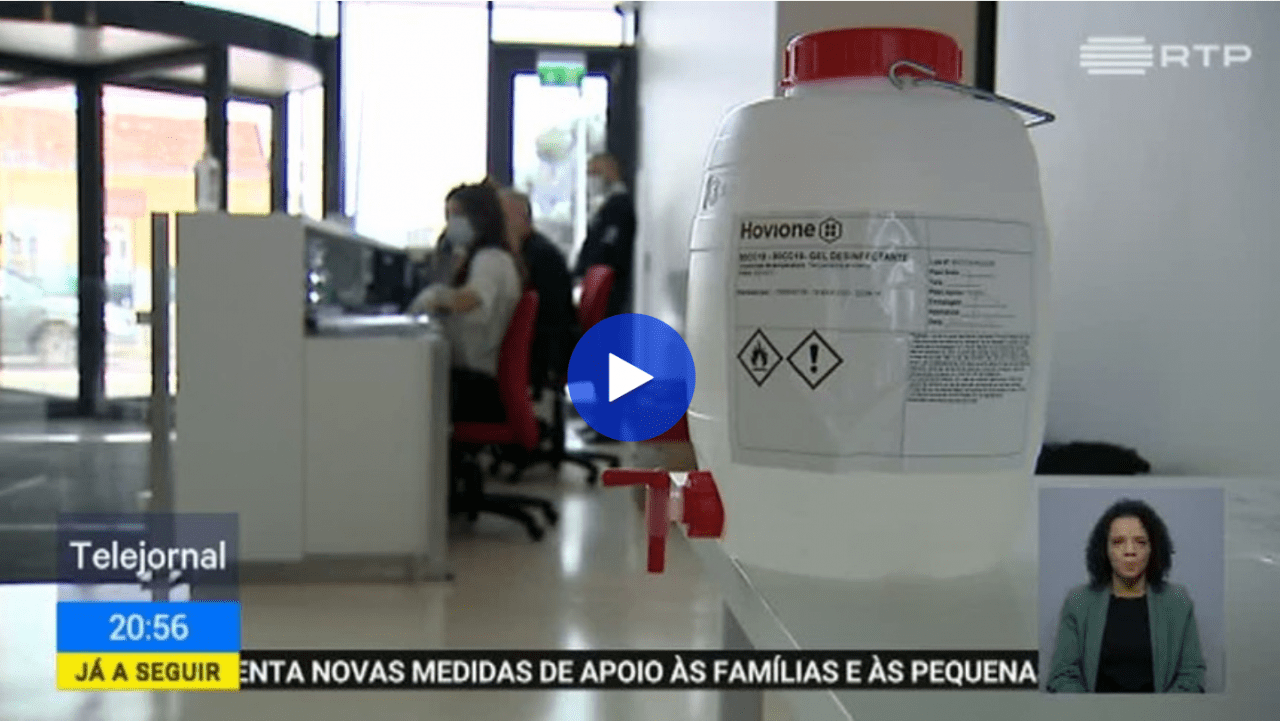
 

RTP1 Covid-19 Hand sanitizer production | Hovione


Certificações

APCER Covid Safe Verified | Hovione

Em resultado de um esforço conjunto entre a Hovione e a Gertal, as Cantinas de Sete Casas e do Lumiar foram certificadas pela APCER com o selo “Covid Safe Verified”.


“Covid Safe” é uma marca desenvolvida pela APCER que certifica o cumprimento das novas regras de segurança e saúde, no contexto da pandemia da Covid-19. Esta certificação é o reconhecimento da preocupação da Hovione e da Gertal em cumprir as regras estabelecidas e em proporcionar as melhores condições de segurança aos nossos Colaboradores.


Notícias / Media

Inspirar à ação… para uma saúde de qualidade (ODS 3) 29 janeiro 2021


ABC Covid-19 (para escolas)

A iniciativa ABC Covid-19 visa ajudar as escolas de todo o país com o regresso às aulas de uma forma prática, eficaz e direta, dando apoio para enfrentar as dificuldades encontradas no funcionamento diário. 

A equipa, composta por estagiários e supervisionada pela equipa de resposta ao Covid-19 da Hovione, pretende ajudar a informar os alunos dos bons hábitos a adotar e como prevenir os riscos, mas também dar apoio aos professores e funcionários para que estes tenham acesso a informação fidedigna, atualizada e simples.

Aqui pode encontrar toda a nossa informação em formato PDF para poder utilizar em forma de posters na escola.

Posters
01. Uso de Máscara A / Uso de Máscara
02. Uso de Máscara B 
03. Retirar a Máscara
04. Regras para sair de casa
05. Recomendações
06. Proteção Covid-19
07. Lave as mãos com frequência
08. Lavagem de mãos / Lavagem de mãos
09. Lavagem de mãos com gel desinfetante
10. Como medir a temperatura
11. Medidas Gerais
12. Medidas Escolas
13. Utilização de Líxivia (1)
14. Utilização de Líxivia (2)
15. Instruções para Elevadores
16. Distanciamento Social
17. Desinfetar Superfícies
 

Sabe mais em ABCovid.pt

Segue-nos nas redes sociais:

facebook logo | Hovione


instagram logo | Hovione


Twitter Logo | Hovione


Youtube Logo | Hovione


Esta certificação tem a validade de 6 meses e é renovada após auditorias de acompanhamento previamente agendadas ou sem aviso prévio. 


Aluno de artes de 17 anos da António Arroio vence concurso ABCovid

Tomás Oliveira, de 17 anos, aluno da Escola Artística António Arroio, em Lisboa, é o vencedor do concurso ABCovid, com o vídeo “Covid-19 simplificado para totós”, em que explica de modo simples e gráfico porque precisamos de máscara para nos protegermos do novo coronavírus.

O concurso ABCovide é uma iniciativa dos estagiários da Hovione dirigida a estudantes do ensino básico e secundário. Para mais informações visite a página www.abcovid.pt 


Also in the Press Room

See All

The company is building out more than 200,000 square feet of space in New Jersey. In April, Contract Pharma had the opportunity to tour Hovione’s expanded manufacturing facility in East Windsor, NJ. The company is planning a formal ribbon-cutting this fall; before that, we got an inside look at some new features. Having established United States operations in 2002, Hovione now has more than 200,000 square feet of space in New Jersey. This will be developed into a large, integrated campus in the next five to ten years. Overall, the company’s recent NJ expansion, which began in 2025, has tripled its total spray-drying capacity in the U.S. Future Facility Upgrades A 125,000-square-foot greenfield acquired by Hovione at the East Windsor campus will eventually be a large-scale production site. This includes enhanced quality control and R&D capabilities. Together, all this adds to Hovione’s stable of manufacturing sites, R&D centers, and other offices spread across three continents. Key to the expansion is a targeted reduction of Hovione’s carbon footprint by 40% by the year 2030. Part of this goal is embracing new and/or changing solvent types to help meet sustainability standards. Additionally, the company says automation that has been put in place at its Portugal site will be replicated in NJ. Hovione Aligns NJ Operations At the Drug, Chemical & Associated Technologies Association (DCAT) Week in New York in March, Contract Pharma met with Hovione. There, David Basile, Vice President of Technical Operations—Americas, further illustrated the New Jersey expansion. “Hovione aims to build an equivalent manufacturing network, where clients can go to any site across the globe,” Basile said. “The design of the facility has been well-thought through with material flows [and] gravity-fed processes. It’s scalable. We call each one of these building segments a finger. You can copy and paste these fingers, and they are built to house both spray drying and drug product assets.” Ultimately, with these moves and a strategic partnership model, Hovione aims to provide customers an opportunity to co-invest and access the company’s proprietary knowledge and assets to accelerate programs and create long-term value. Read the full article at ContractPharma.com    

Press Clipping

Hovione Planning Ribbon-Cutting at NJ Facility – A Behind-the-Scenes Preview

Jul 31, 2026

The podcast "The Next Discovery" is a six-episode series created by Observador, a leading Portuguese digital newspaper and radio station, in partnership with Hovione.   From hospitals to patients’ homes, discover the solutions that make it possible to administer high-dose biologics with greater comfort, less pain, and more freedom in treatment. What if some of the scientific breakthroughs that could improve the lives of millions of people were happening right now in Portugal? The Next Discovery. Listen to the last episode of the podcast here, featuring João Pires and Joana Cristóvão from Hovione’s Research and Development Center. [English transcription] Nelson Ferreira (NF): Welcome to the sixth and final episode of The Next Discovery, a podcast series in which Hovione opens the doors to its world to share the global impact of innovation developed in Portugal. I’m Nelson Ferreira, and throughout this journey we have explored chemical processes, ultrafine particles, and revolutionary production lines. Today, we look directly at the future of medicine. After exploring the world of small molecules, we are now entering a new therapeutic dimension: biologic medicines. Based on larger and more complex molecules, these treatments are opening new possibilities for addressing a wide range of diseases. To explain how this field is evolving and how science can make these treatments more effective, stable, and accessible to patients, I’m joined by João Pires and Joana Cristóvão from Hovione’s Research and Development Center. NF: Welcome to you both. João, let me start with you. For someone who has never heard this term before, what exactly are biologic medicines, and what sets them apart from small-molecule drugs, which are more closely associated with traditional chemistry? João Pires (JP): If we think about the medicines we find in pharmacies today, most of them are indeed composed of small molecules. These are simpler structures that are still highly effective and that we can design and manufacture through what we call classical chemistry, a field that has developed its knowledge over the last 150 to 200 years. Biologics are completely different. Because of their complexity, larger size, and structure, they differ mainly in their origin. They are produced from living organisms, such as cells, which, under the right conditions, can function as biological factories. Just as in our own bodies, they allow us to produce and extract substances that can have a significant therapeutic effect for certain diseases. In that sense, biologics benefit from millions of years of evolution, something classical chemistry simply does not have. NF: Biology is what carried out that evolution. JP: Exactly. Biology. That’s part of the beauty of it. NF: Nature carried out that entire process for us. NF: Joana, since these medicines are created from living organisms, can we say they are, in a way, more “intelligent” and have greater therapeutic potential? Joana Cristóvão (JC): In some cases, they do have tremendous therapeutic potential. One of the advantages of these molecules is their remarkable specificity. You can think of it as a key fitting into a lock. It has to be the right key. Biologics, because they speak the same biological language as our bodies, have this advantage. However, that does not mean they are better than small molecules. It means that, because they are produced by living microorganisms, they are highly complex and would be very difficult, and in some cases impossible, to produce through traditional chemical synthesis. Their great strength lies in their specificity. Examples of biologics include proteins that facilitate communication within the body and monoclonal antibodies that identify specific targets. These functions are particularly suited to biologics and less common among small molecules. NF: João, as I understand it, this is still an emerging field worldwide. How did Hovione, a company historically linked to chemical synthesis and small-molecule particle engineering, decide to embrace the challenge of biologics? JP: Honestly, it has been a very natural transition. Over the years, Hovione has developed highly specialized expertise in chemistry, particle engineering, and formulation science. When we look at biologics, despite their greater complexity, the underlying challenge is very similar. These medicines still require materials, processes, and controls to ensure they reach patients safely, consistently, and effectively. NF: But is there real potential? JP: Absolutely. Not only is there potential, but there are also significant challenges. This leads to the second point: curiosity. Throughout Hovione’s history, starting with our founder, there has always been a drive to embrace increasingly complex challenges. That curiosity is part of our DNA, particularly within our Innovation and Development Center. It is also one of the most rewarding aspects of working at Hovione: being part of this transition. NF: And it is not that far removed from Hovione’s history either. JP: Exactly. NF: Joana, in which therapeutic areas have biologics already had the greatest impact? Are there diseases where they have clearly transformed patient treatment? JC: There are several areas. NF: So this is no longer science fiction. It already exists in practice. JC: Exactly, and it has existed for quite some time in some fields. In oncology, for example, antibodies are used to target and kill cancer cells with high specificity. Instead of attacking cells broadly, these treatments target the disease’s underlying mechanisms. NF: Which I assume reduces side effects. JC: It does. Cancer is also a very clever disease. It evolves rapidly and often hides from our immune system. There are biologic therapies designed to help our natural defenses do their job by removing the “invisible cloak” that some tumors use to evade detection and progress rapidly. Another classic example is diabetes. Insulin has been the most common treatment for diabetes for decades. Before biotechnology, insulin was extracted from animals, making production limited. With biotechnology, we gained the ability to produce human insulin, known as recombinant insulin, using living microorganisms. This transformation made the treatment available to far more people and has saved countless lives. NF: Two clear examples where biologics are already making a difference. João, these medicines are on the market today, but I imagine developing and stabilizing them in the laboratory presents major technical challenges. What are they? JP: Because these molecules are highly complex and, as Joana described, quite elegant, they are also extremely sensitive, almost like greenhouse flowers. Biological evolution has optimized them to survive under very specific conditions, conditions that often do not exist during manufacturing, transportation, or administration. As a result, they are highly sensitive to heat, air, pressure, and even prolonged contact with one another. When these molecules interact too much, they can lose their structure and unfortunately their therapeutic effect as well. This is where we come in. Clients often approach us with molecules that have tremendous therapeutic potential but are still only proof-of-concept projects. Our role is to take those early experimental results and develop the controls, processes, and formulations needed to scale production to thousands or even millions of doses while maintaining impeccable quality and stability. NF: Joana, how are these medicines administered? Are they different from conventional drugs? Traditionally, many biologics require intravenous administration in a hospital setting. Is that still the case? JC: Traditionally, yes. Most biologics are administered directly into a vein through an infusion, similar to receiving an IV drip. However, the pharmaceutical industry is not only focused on treating diseases. It is also increasingly focused on the patient experience. These treatments require hospital visits and can take time to administer. For chronic illnesses, this process repeats throughout a patient's life. The industry's goal is to develop alternative treatments that are more comfortable and give patients greater independence. NF: So they would no longer need to go to the hospital. JC: Exactly. The ultimate objective is to create injectable solutions that patients can administer themselves. Achieving this requires innovation in technology, formulation development, and medical devices. NF: João, this is where high-concentration formulations come in. What does that mean in practice? Could we eventually administer these medicines ourselves without the help of a nurse? JP: We certainly hope so. The concept of high-concentration formulations is relatively simple: fitting as much medicine as possible into the smallest possible volume. Ideally, that volume is small enough to fit into something like an auto-injector that can be carried in a pocket. NF: A pen-like device. JP: Exactly, a pen. Thanks to newer treatments, particularly in areas such as obesity, these devices have become much more familiar to the public. Technically, it sounds simple: more medicine, less liquid. But as we discussed earlier, these molecules are highly sensitive. As concentration increases and the molecules become more crowded together, challenges emerge. In addition to stability concerns, there is the issue of viscosity. This is easy to visualize: the more concentrated something is, the thicker it becomes. NF: Which makes it harder to inject. JP: Exactly. And greater viscosity generally means greater pain during administration. That directly contradicts the goal of developing treatments that are more convenient and patient-friendly. This is one of the major challenges facing the industry today: finding ways to overcome dose limitations and reduce administration volumes without compromising therapeutic effectiveness, convenience, or patient acceptance. NF: Joana, before we finish, what do scientists feel when they look toward the future and see Hovione’s work helping bring medicine closer to solutions that are increasingly personalized, convenient, patient-centered, and comfortable? JC: I think it is a tremendous responsibility, and that responsibility is also a major source of motivation. Medicine is becoming increasingly personalized and focused on the biological mechanisms that cause disease rather than simply treating symptoms. It is incredibly rewarding to be part of teams contributing to this journey toward a better future, one that places patients at the center. NF: João, is the future biological? JP: Not exclusively, but certainly in part. Biologics allow us to dream bigger. They open the door to better, more personalized, and more effective medicines, creating possibilities that were difficult to imagine until now. NF: João Pires and Joana Cristóvão, thank you for opening the doors to the future of medicine. With this look toward tomorrow, we conclude the first season of The Next Discovery. Over the course of six episodes, we traveled from a basement laboratory in Lisbon in 1959 to global technological leadership that now touches the lives of more than 80 million people every year. These conversations have shown that with curiosity, rigor, and talent, the next great scientific breakthroughs can indeed bear the signature of our country. To listen to all episodes of this series, visit observador.pt or your favorite podcast platforms. Until the next discovery.

Article

Podcast “The Next Discovery” (EP6) - High-Dose Biologics: From Fiction to Reality

Jul 23, 2026

The podcast "The Next Discovery" is a six-episode series created by Observador, a leading Portuguese digital newspaper and radio station, in partnership with Hovione. From asthma to therapies that may one day reach the brain, we follow Hovione’s journey in respiratory and nasal drug delivery, where every particle is engineered to improve patients’ lives. What if some of the scientific breakthroughs that could improve the lives of millions of people were happening right now in Portugal? Welcome to The Next Discovery. Listen to the fifth episode of the podcast here, featuring Eunice Costa, Director of Research and Development Center at Hovione. [English transcription] Nelson Ferreira (NF): Welcome to The Next Discovery. This is a partnership between Rádio Observador and Hovione, a six-episode series where we open the doors to science and innovation with global impact. I’m Nelson Ferreira, and today we’ll explore how the respiratory system and the nasal route are being used to deliver medicines throughout the body in fast and innovative ways. Joining us is Eunice Costa, Director at Hovione’s Research and Development Center. NF: Hello, Eunice, and welcome. Hovione’s history is closely linked to the lung. More than two decades ago, you began developing and manufacturing solutions for inhaled medicines. What are the major diseases whose treatment has advanced significantly with the help of these innovations? Eunice Costa (EC): Hello, Nelson. Thank you for the invitation. To begin with, respiratory diseases are among the most prevalent conditions and have a tremendous societal impact. We have asthma and chronic obstructive pulmonary disease, or COPD. The technology required to manage these diseases, from molecule design to formulations and delivery devices, is fundamental to making them manageable. While they certainly have a significant impact on patients’ daily lives, these conditions can be effectively controlled, allowing people to live normal lives. NF: Especially because some of them aren’t curable. EC: Exactly. NF: COPD is one example. EC: That’s right. The medicines available today are primarily aimed at disease management, particularly bronchodilation, keeping the airways open and unobstructed. NF: Is that what an asthma inhaler does? EC: Exactly. That’s what the asthma inhaler does, the device everyone recognizes. It’s probably the most iconic example, and one that we often see used incorrectly in movies. NF: Really? Is it also what we use during a spirometry test? EC: Spirometry is primarily a diagnostic test that measures lung capacity when disease is already present. NF: But an inhaled medication is also used during the procedure, right? EC: Exactly. NF: Today, Hovione is also proud to offer end-to-end solutions for inhaled and nasal medicines, primarily targeting the lungs, as we’ve been discussing. Does that mean you control the entire process, from molecule synthesis all the way to the final inhaler device? EC: Yes, exactly. And the journey has been very gradual and organic, so to speak. If I can make a chemistry joke, “organic” fits quite well. But let’s continue. Hovione started with molecule synthesis, which is part of our history. From there, we specialized in controlling what we call particle size, or particle engineering, because these medicines need to be carefully engineered to be delivered effectively to the lungs. We handle synthesis, though we don’t work in drug discovery itself. We’re not discovering new molecules; rather, we support pharmaceutical companies with synthesis and, in this case, particle engineering, which is critical for inhaled medicines. Next comes combining the active pharmaceutical ingredient with additional components to create a medicine, which is also far from simple. Finally, there’s the inhaler, the medical device people actually see. It’s the engine that generates the aerosol. In the traditional asthma inhaler, which is the best-known example, aerosol generation is active. A pressurized gas propels the medication. In the types of devices we specialize in, known as passive devices, dry powder aerosols are generated using the patient’s own inhalation effort. NF: The patient inhales the powder. EC: Exactly. It’s still a challenge because there needs to be a perfect combination of particle properties, formulation, and device design to create the aerosol and achieve effective deposition in the lungs. We have control over all those aspects. NF: The lung seems like a particularly challenging organ for drug delivery. What makes it so difficult to ensure the medicine reaches exactly where it’s supposed to go? EC: Right. NF: Do you put a GPS on it? EC: Not exactly. That would be nice. The reality is that the lung has evolved over millions of years to prevent the entry of any foreign particle, whether it’s a pathogen, a virus, or anything else. NF: That’s its natural behavior. EC: Exactly, and fortunately for us. The lung is very effective at preventing exposure. It’s often said that if the entire surface of the lungs were spread out, it would be about the size of a tennis court. It’s an enormous surface area. Without defense mechanisms, we would constantly be exposed to harmful particles. Evolution designed the lungs to keep everything out. When we try to use the lungs as a route of administration to treat patients, we have to find ways to navigate around those defense mechanisms. NF: Or trick the lungs. EC: Yes, you could say that. We have to persuade them. The key lies in a magic number: aerosol particle size. Whether it’s a dry powder cloud or a liquid aerosol, the particles need to be between one and five microns in size. We’re talking about particles at least ten times smaller than a human hair. These are extremely fine powders. Very small particles tend to clump together, absorb moisture, and behave unpredictably. First, you have to reduce particle size, then control those behaviors, and finally use a relatively simple device. NF: Of course. EC: A device capable of generating that aerosol. NF: And one that anyone can use. EC: Exactly. NF: I believe Japan crossed paths with Hovione’s story again through the success of Inavir. What is this product, and what impact did it have? EC: Inavir is a story that goes back several years and is very illustrative of Hovione’s role in this specialized pharmaceutical niche. It’s an area that requires a broad set of competencies. For context, Inavir is an antiviral medication used to treat influenza. It’s administered directly to the lungs, which are the entry point for the virus. Hovione was involved in developing both the formulation inside the device and the device itself. The inhaler remains, to this day, the world’s only single-use inhaler. It’s extremely simple because patients using it have the flu. Reusing an inhaler in that situation makes little sense. The goal is to use it once and then discard it. The challenge was developing an inhaler that was cost-effective and sustainable while being designed for a single administration. NF: Use it once and throw it away. EC: Exactly. Since its approval in 2010, it has remained the world’s only single-use inhaler. We can say that millions of people have been treated with a technology developed in Portugal. NF: That’s also a source of national pride. EC: Absolutely. NF: In recent years, the nasal route has generated tremendous scientific interest, particularly because of its potential to reach certain areas of the body, including the brain and central nervous system, more quickly. What makes this route so special? It seems to have no toll booths. EC: Well, there are a few. We still need to bypass the body’s defense mechanisms. The nasal route is fascinating because we often associate anything administered through the nose with allergic rhinitis, pollen allergies, or sinus infections. NF: And allergies in general. EC: Exactly. Conditions that are very localized. But in reality, the nasal cavity offers extremely rapid absorption. Researchers began exploring it as a gateway for treating conditions not necessarily linked to nasal symptoms. Initially, this included areas such as pain management, particularly migraines. More recently, it has also been explored as a potential route to the brain itself. Why? Because our sense of smell originates in the nasal cavity, which contains a network of nerves. NF: Although what allows us to smell is actually in the brain. EC: Exactly. This is one of the few non-invasive routes that provides a relatively direct pathway from the nose to the brain through the olfactory and trigeminal nerves. It opens the door to much more patient-friendly approaches for treating disease. NF: Looking toward the future of healthcare, could nasal delivery eventually replace injections for many therapies? Might we someday say goodbye to needles? EC: Unfortunately, I don’t think so. So many innovative therapies are being developed, and needles and injections remain the most reliable way to ensure delivery, especially for advanced biologic therapies, where administration efficiency must be close to 100%. Everything that is prepared must reach the patient. We’re still far from guaranteeing that level of efficiency through the nose or the lungs. Not yet. NF: Not yet, but there are already significant advantages in certain situations. To bring all these innovations to market, research can’t happen in isolation. Does your team work with scientific and academic partners who accelerate these discoveries? EC: Absolutely. First and foremost, our partnerships with Portuguese universities have been an essential source of talent and knowledge for the advances we’ve made over the years, particularly in respiratory drug delivery. The Faculties of Pharmacy in Lisbon and Coimbra, NOVA University, and Instituto Superior Técnico have all been key partners. Not only academic institutions, but also industry partners. Given the complexity of what we do, multiple disciplines need to come together, from mechanical engineering and physiology to biology. No one achieves major breakthroughs alone. We also collaborate with companies such as Precisepart in Germany in the area of inhaler devices. These partnerships have been absolutely fundamental to our success. NF: Eunice Costa, scientist at Hovione, thank you for helping us understand how science is transforming lung health and how the nasal route is becoming a gateway for medicines that could improve the lives of millions of people. This was the fifth episode of The Next Discovery. Next week, we’ll reach the final chapter of this season and explore what almost sounds like science fiction becoming reality. We’ll discover high-dose biologic medicines and learn how cancer treatments may move from hospitals into our homes. All episodes are available at observador.pt and on major podcast platforms. Until the next discovery.

Article

Podcast “The Next Discovery” (EP5) - Lung and Nasal Delivery: Science That Breathes

Jul 16, 2026