Press Room

News / Oct 23, 2018

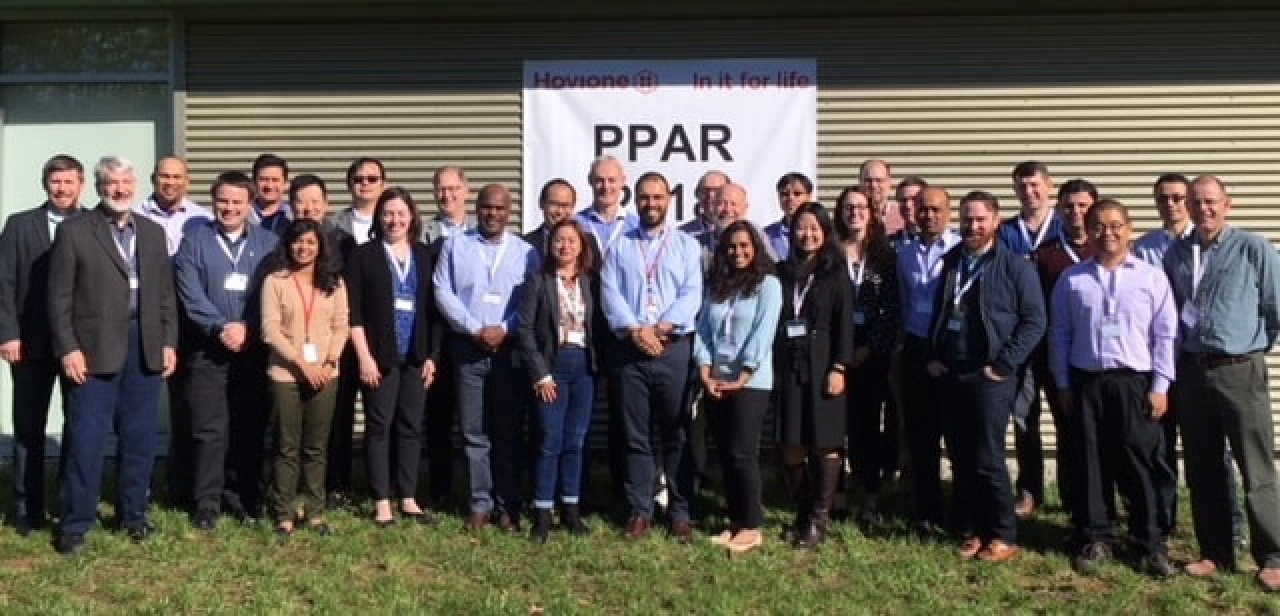
Hovione New Jersey hosts 2018 PPAR Conference

The Pharmaceutical Process Analytics Roundtable (PPAR) Annual Event at Hovione New Jersey

New Jersey hosts 2018 PPAR Conference | Hovione

During October 15th to 17th, Hovione New Jersey hosted the Pharmaceutical Process Analytics Roundtable (PPAR) annual event. PPAR is a meeting/gathering of PAT practioneers in the Pharma industry that happens once a year where several PAT related topics are discussed (e.g.: regulatory aspects, technology novelties, people & organization, etc.).

Continuous Manufacturing have become a major topic as it makes intense use of PAT for process control and release of product.

Participants for this year event came from Pfizer, Merck, Janssen, BMS, Eli Lilly, AbbVie, Biogen, Amgen, GSK, Sanofi, Vertex, and Genentech. Nuno Matos and Savitha Panikar were the Hovione participants.

Also in the Press Room

See All

The podcast "The Next Discovery" is a six-episode series created by Observador, a leading Portuguese digital newspaper and radio station, in partnership with Hovione. From asthma to therapies that may one day reach the brain, we follow Hovione’s journey in respiratory and nasal drug delivery, where every particle is engineered to improve patients’ lives. What if some of the scientific breakthroughs that could improve the lives of millions of people were happening right now in Portugal? Welcome to The Next Discovery. Listen to the fifth episode of the podcast here, featuring Eunice Costa, Director of Research and Development Center at Hovione. [English transcription] Nelson Ferreira (NF): Welcome to The Next Discovery. This is a partnership between Rádio Observador and Hovione, a six-episode series where we open the doors to science and innovation with global impact. I’m Nelson Ferreira, and today we’ll explore how the respiratory system and the nasal route are being used to deliver medicines throughout the body in fast and innovative ways. Joining us is Eunice Costa, Director at Hovione’s Research and Development Center. NF: Hello, Eunice, and welcome. Hovione’s history is closely linked to the lung. More than two decades ago, you began developing and manufacturing solutions for inhaled medicines. What are the major diseases whose treatment has advanced significantly with the help of these innovations? Eunice Costa (EC): Hello, Nelson. Thank you for the invitation. To begin with, respiratory diseases are among the most prevalent conditions and have a tremendous societal impact. We have asthma and chronic obstructive pulmonary disease, or COPD. The technology required to manage these diseases, from molecule design to formulations and delivery devices, is fundamental to making them manageable. While they certainly have a significant impact on patients’ daily lives, these conditions can be effectively controlled, allowing people to live normal lives. NF: Especially because some of them aren’t curable. EC: Exactly. NF: COPD is one example. EC: That’s right. The medicines available today are primarily aimed at disease management, particularly bronchodilation, keeping the airways open and unobstructed. NF: Is that what an asthma inhaler does? EC: Exactly. That’s what the asthma inhaler does, the device everyone recognizes. It’s probably the most iconic example, and one that we often see used incorrectly in movies. NF: Really? Is it also what we use during a spirometry test? EC: Spirometry is primarily a diagnostic test that measures lung capacity when disease is already present. NF: But an inhaled medication is also used during the procedure, right? EC: Exactly. NF: Today, Hovione is also proud to offer end-to-end solutions for inhaled and nasal medicines, primarily targeting the lungs, as we’ve been discussing. Does that mean you control the entire process, from molecule synthesis all the way to the final inhaler device? EC: Yes, exactly. And the journey has been very gradual and organic, so to speak. If I can make a chemistry joke, “organic” fits quite well. But let’s continue. Hovione started with molecule synthesis, which is part of our history. From there, we specialized in controlling what we call particle size, or particle engineering, because these medicines need to be carefully engineered to be delivered effectively to the lungs. We handle synthesis, though we don’t work in drug discovery itself. We’re not discovering new molecules; rather, we support pharmaceutical companies with synthesis and, in this case, particle engineering, which is critical for inhaled medicines. Next comes combining the active pharmaceutical ingredient with additional components to create a medicine, which is also far from simple. Finally, there’s the inhaler, the medical device people actually see. It’s the engine that generates the aerosol. In the traditional asthma inhaler, which is the best-known example, aerosol generation is active. A pressurized gas propels the medication. In the types of devices we specialize in, known as passive devices, dry powder aerosols are generated using the patient’s own inhalation effort. NF: The patient inhales the powder. EC: Exactly. It’s still a challenge because there needs to be a perfect combination of particle properties, formulation, and device design to create the aerosol and achieve effective deposition in the lungs. We have control over all those aspects. NF: The lung seems like a particularly challenging organ for drug delivery. What makes it so difficult to ensure the medicine reaches exactly where it’s supposed to go? EC: Right. NF: Do you put a GPS on it? EC: Not exactly. That would be nice. The reality is that the lung has evolved over millions of years to prevent the entry of any foreign particle, whether it’s a pathogen, a virus, or anything else. NF: That’s its natural behavior. EC: Exactly, and fortunately for us. The lung is very effective at preventing exposure. It’s often said that if the entire surface of the lungs were spread out, it would be about the size of a tennis court. It’s an enormous surface area. Without defense mechanisms, we would constantly be exposed to harmful particles. Evolution designed the lungs to keep everything out. When we try to use the lungs as a route of administration to treat patients, we have to find ways to navigate around those defense mechanisms. NF: Or trick the lungs. EC: Yes, you could say that. We have to persuade them. The key lies in a magic number: aerosol particle size. Whether it’s a dry powder cloud or a liquid aerosol, the particles need to be between one and five microns in size. We’re talking about particles at least ten times smaller than a human hair. These are extremely fine powders. Very small particles tend to clump together, absorb moisture, and behave unpredictably. First, you have to reduce particle size, then control those behaviors, and finally use a relatively simple device. NF: Of course. EC: A device capable of generating that aerosol. NF: And one that anyone can use. EC: Exactly. NF: I believe Japan crossed paths with Hovione’s story again through the success of Inavir. What is this product, and what impact did it have? EC: Inavir is a story that goes back several years and is very illustrative of Hovione’s role in this specialized pharmaceutical niche. It’s an area that requires a broad set of competencies. For context, Inavir is an antiviral medication used to treat influenza. It’s administered directly to the lungs, which are the entry point for the virus. Hovione was involved in developing both the formulation inside the device and the device itself. The inhaler remains, to this day, the world’s only single-use inhaler. It’s extremely simple because patients using it have the flu. Reusing an inhaler in that situation makes little sense. The goal is to use it once and then discard it. The challenge was developing an inhaler that was cost-effective and sustainable while being designed for a single administration. NF: Use it once and throw it away. EC: Exactly. Since its approval in 2010, it has remained the world’s only single-use inhaler. We can say that millions of people have been treated with a technology developed in Portugal. NF: That’s also a source of national pride. EC: Absolutely. NF: In recent years, the nasal route has generated tremendous scientific interest, particularly because of its potential to reach certain areas of the body, including the brain and central nervous system, more quickly. What makes this route so special? It seems to have no toll booths. EC: Well, there are a few. We still need to bypass the body’s defense mechanisms. The nasal route is fascinating because we often associate anything administered through the nose with allergic rhinitis, pollen allergies, or sinus infections. NF: And allergies in general. EC: Exactly. Conditions that are very localized. But in reality, the nasal cavity offers extremely rapid absorption. Researchers began exploring it as a gateway for treating conditions not necessarily linked to nasal symptoms. Initially, this included areas such as pain management, particularly migraines. More recently, it has also been explored as a potential route to the brain itself. Why? Because our sense of smell originates in the nasal cavity, which contains a network of nerves. NF: Although what allows us to smell is actually in the brain. EC: Exactly. This is one of the few non-invasive routes that provides a relatively direct pathway from the nose to the brain through the olfactory and trigeminal nerves. It opens the door to much more patient-friendly approaches for treating disease. NF: Looking toward the future of healthcare, could nasal delivery eventually replace injections for many therapies? Might we someday say goodbye to needles? EC: Unfortunately, I don’t think so. So many innovative therapies are being developed, and needles and injections remain the most reliable way to ensure delivery, especially for advanced biologic therapies, where administration efficiency must be close to 100%. Everything that is prepared must reach the patient. We’re still far from guaranteeing that level of efficiency through the nose or the lungs. Not yet. NF: Not yet, but there are already significant advantages in certain situations. To bring all these innovations to market, research can’t happen in isolation. Does your team work with scientific and academic partners who accelerate these discoveries? EC: Absolutely. First and foremost, our partnerships with Portuguese universities have been an essential source of talent and knowledge for the advances we’ve made over the years, particularly in respiratory drug delivery. The Faculties of Pharmacy in Lisbon and Coimbra, NOVA University, and Instituto Superior Técnico have all been key partners. Not only academic institutions, but also industry partners. Given the complexity of what we do, multiple disciplines need to come together, from mechanical engineering and physiology to biology. No one achieves major breakthroughs alone. We also collaborate with companies such as Precisepart in Germany in the area of inhaler devices. These partnerships have been absolutely fundamental to our success. NF: Eunice Costa, scientist at Hovione, thank you for helping us understand how science is transforming lung health and how the nasal route is becoming a gateway for medicines that could improve the lives of millions of people. This was the fifth episode of The Next Discovery. Next week, we’ll reach the final chapter of this season and explore what almost sounds like science fiction becoming reality. We’ll discover high-dose biologic medicines and learn how cancer treatments may move from hospitals into our homes. All episodes are available at observador.pt and on major podcast platforms. Until the next discovery.

Article

Podcast “The Next Discovery” (EP5) - Lung and Nasal Delivery: Science That Breathes

Jul 30, 2026

The podcast "The Next Discovery" is a six-episode series created by Observador, a leading Portuguese digital newspaper and radio station, in partnership with Hovione. From factory to pharmacy in far less time: how continuous tablet manufacturing is making treatments faster, more robust, and more accessible to those who need them most. What if some of the scientific breakthroughs that could improve the lives of millions of people were happening right now in Portugal? Welcome to The Next Discovery. Listen to the fourth episode of the podcast here, featuring João Ventura, Senior Director of Pharmaceutical Product Development at Hovione. [English transcription] Nelson Ferreira (NF): Welcome to The Next Discovery. This is a partnership between Rádio Observador and Hovione—a six-episode series in which we open the doors to global pharmaceutical development driven from Portugal. I’m Nelson Ferreira, and today we’ll explore a technology that is transforming the way medicines are produced and accelerating patient access to new treatments. To guide us on this journey, we’re joined by João Ventura, Senior Director of Pharmaceutical Product Development at Hovione. NF: Hello, João, and welcome. For decades, the industry relied on what is known as batch manufacturing. How did this traditional method work, and why does continuous manufacturing represent such a significant change for the pharmaceutical industry? João Ventura (JV): Thank you, Nelson, for the invitation and for that question, which is a great place to start discussing this innovation. As you mentioned, for many decades the pharmaceutical industry produced tablet medicines using the traditional batch manufacturing method. This approach involves producing a very specific quantity of product—a batch—at a time and performing each individual production step separately. This means that each subsequent step typically begins only after the entire batch from the previous stage has been manufactured, processed, collected, and sampled for quality verification. In tablet production, the process includes weighing, blending, granulation, tablet compression, and finally tablet coating. While this method is well understood, mature, and fully established from both an industrial and regulatory standpoint, it can become inefficient because material may spend a considerable amount of time sitting idle between production stages—waiting for quality checks or for equipment in the next step to become available. By contrast, continuous tablet manufacturing allows material to move continuously and automatically through all stages of the process while simultaneously monitoring the quality of the tablets being produced. This enables continuous manufacturing to deliver benefits that traditional batch manufacturing simply cannot achieve. NF: João, producing continuously certainly sounds more logical, but as I understand it, this is still a relatively new technology in the pharmaceutical industry. When did the market begin to embrace this change? JV: You're absolutely right, Nelson. As you know, the pharmaceutical industry is necessarily conservative and adopts innovation very carefully, for good reason. It was only in the early 2000s that the U.S. Food and Drug Administration (FDA) began encouraging the industry to develop alternative technologies that were both more agile and more robust from a quality perspective. These technologies are based on integrating and automating the entire tablet manufacturing process in a continuous flow. This required the development of a new generation of manufacturing equipment capable of performing the entire process automatically and continuously, as well as sophisticated electronics and software to monitor and inspect product quality throughout intermediate stages and in the final tablet. Following these early technological developments, the FDA approved the first continuously manufactured products from major pharmaceutical companies such as Vertex and Janssen during the 2010s. This marked a pivotal turning point and significantly accelerated adoption of continuous tablet manufacturing. NF: What practical challenges does this new system solve in day-to-day operations? I imagine there are important quality-control advantages as well, especially since you mentioned quality can be assessed throughout the process and in the final tablet. JV: Absolutely. The successful commercialization of that first wave of continuously manufactured medicines by companies such as Vertex and Janssen was extremely important because it demonstrated to the industry that this technology could deliver substantial benefits for both patients and manufacturers. First, it shortens development and production timelines for new medicines, allowing innovative therapies and new drug products to reach patients much faster than before. NF: So they can reach the market sooner as well. JV: Exactly. In addition, as you mentioned, this technology makes it possible to verify the quality of every tablet produced, rather than relying on a small sample as in batch manufacturing. That alone provides greater quality assurance and robustness, ultimately benefiting society as a whole. NF: And does that speed advantage become particularly important during medical or public health emergencies? Can this system respond more quickly to urgent demand? JV: Yes, that is one of the technology’s most significant potential advantages. In a continuous process, it’s possible to produce in minutes what might take weeks in traditional batch manufacturing due to processing delays and waiting times. Beyond the economic benefits, this offers a major advantage in medical or public health emergencies, where production of new medicines may need to be rapidly scaled up to meet urgent demand. NF: Was COVID-19 an example of that? JV: It’s a perfect example. NF: Has this technology already delivered that benefit? JV: Not yet, but we anticipate that in future pandemic situations, continuous manufacturing will play a critical role in scaling industrial production much more rapidly, much as we saw with the need to rapidly expand vaccine production. NF: Hovione positioned itself as a global pioneer in this technology, largely through a strategic partnership with Vertex that you mentioned earlier. This happened in 2016. How did a Portuguese company become the first of its kind to adopt such an important industrial-scale advancement in the United States? JV: Since its founding, Hovione’s history has been closely linked to the adoption and application of new pharmaceutical manufacturing technologies capable of delivering significant industrial and economic advantages. That has been one of the company’s keys to success. During the 2010s, Hovione recognized the potential and benefits of continuous tablet manufacturing early on. As you mentioned, in 2016, Hovione entered into a strategic partnership with Vertex to establish industrial-scale continuous tablet manufacturing capabilities in the United States. Hovione was likely the first company of its kind to adopt this technology. This was important not only for industry-wide adoption but also because, in partnership with Vertex, it played a key role in developing a new, more effective treatment for cystic fibrosis—a devastating, currently incurable disease that primarily affects children. NF: Earlier, you mentioned that this represented a significant industrial challenge. I imagine it required designing and installing far more sophisticated equipment to make it all work. JV: That's correct, Nelson. The challenges were enormous during the first industrial-scale implementation of continuous tablet manufacturing. Hovione’s team led the project from the initial facility and equipment design stages all the way through construction of the building, installation of the new equipment, and operational execution of the manufacturing process for this new Vertex medicine, which has played an important role in treating a serious and incurable disease. NF: After that first facility in the United States, this technology was also brought to Portugal, to Loures, where Hovione has operated a second production line for several years. Does this, in a way, complete the cycle for Hovione, allowing the company to work from molecule to finished tablet? JV: Exactly. Following the success of the first industrial installation and the experience gained, and driven by growing market demand and interest in the technology, Hovione expanded its manufacturing capacity in the early 2020s by building and commissioning a second continuous tablet manufacturing facility at its Loures site in Portugal. As you noted, the Loures facility is capable of performing the entire development cycle—from chemical production of the innovative molecule through formulation and manufacture of the final tablet. NF: João, we’re speaking at a time when global soccer competitions often inspire national pride. I imagine there’s also a sense of pride when patients anywhere in the world take an innovative medicine knowing that the engineering and technology behind it involved Portuguese teams. JV: Absolutely, Nelson. By combining our ability in Portugal to identify and adopt innovative technologies with investments in advanced manufacturing capabilities, we can position ourselves as trusted partners to our customers across our industries. That has certainly been the case with Hovione. As you mentioned, we have helped produce innovative medicines that improve the quality of life of millions of people around the world. That should be a source of pride for all of us here in Portugal, just as our national soccer team is. NF: João, thank you very much for explaining how this technology is challenging traditional manufacturing and accelerating the production of life-saving medicines. João Ventura is Senior Director of Pharmaceutical Product Development at Hovione. That concludes the fourth episode of The Next Discovery. In the coming weeks, we’ll explore a new topic: how the respiratory and nasal systems can be used to deliver medicines more effectively to the lungs and, in some cases, even serve as a direct highway to the brain. Don’t miss the upcoming episodes at observador.pt and on your favorite podcast platforms. Until the next discovery.

Article

Podcast “The Next Discovery” (EP4) - Continuous Tablets, Lives in Motion

Jul 09, 2026

The podcast "The Next Discovery" is a six-episode series created by Observador, a leading Portuguese digital newspaper and radio station, in partnership with Hovione. From particle engineering to global leadership in spray drying, discover the technology that enables oral medicines to be effectively absorbed by the body and help treat millions of people. What if some of the scientific breakthroughs that could improve the lives of millions of people were happening right now in Portugal? Welcome to "The Next Discovery. Listen to the third episode of the podcast here, featuring Filipe Gaspar, VP Technology Intensification, and José Luís Santos, Strategic Business Management Senior Director, at Hovione. [English transcription] Nelson Ferreira (NF): Welcome to The Next Discovery. This is a partnership between Rádio Observador and Hovione, a six-episode series in which we show how science developed in Portugal has a real impact around the world. I’m Nelson Ferreira, and in the last episode we explored how APIs—the active pharmaceutical ingredients in medicines—are produced. Today, we move to the next stage: how do we transform that chemical powder into a medicine that our bodies can actually absorb? To help explain this science, I’m joined by Filipe Gaspar and José Luís Santos, who were involved in the creation and development of Hovione’s particle engineering division. Welcome to you both. Filipe, let me start with you. NF: When we hear about a new medicine, we usually think about the molecule that was discovered. But why isn’t that discovery alone enough? What exactly is particle engineering, and what role does it play in turning a promising molecule into a medicine that is truly effective? Filipe Gaspar (FG): Nelson, the active ingredients in many modern medicines are not effective in the form in which they are produced through chemical or biological processes. To work properly in the body, they need to undergo additional transformations. For example, some medicines must be protected from the acidity of the stomach so they can later be released in the intestine, where the environment is less acidic and absorption into the bloodstream can occur. Others require very specific particle sizes. This is the case with inhalation powders, often used to treat asthma or chronic bronchitis. If the particles are too large, they become trapped in the upper airways and never reach the alveoli, where they need to be absorbed. On the other hand, if they are too small, they may simply be exhaled before absorption occurs. Finding the right particle size is therefore essential to ensuring an effective treatment. Another remarkable example is modern oral medicines, which often need to be converted into a different form—the amorphous form—so that the body can absorb them properly. Particle engineering makes all of this possible, overcoming many of these limitations by improving drug absorption, distribution, and therapeutic effectiveness. NF: I believe that in 2003 Hovione made a bold decision and invested in spray drying technology. José, for our listeners, could you explain in simple terms what this technology is, what problem it solves, and why it was so revolutionary at the time? José Luís Santos (JLS): First, it’s worth noting that spray drying has been used for decades in other industries. Think, for example, about powdered milk, instant coffee, or the powdered detergent we use in our washing machines. In all these cases, we start with a liquid—milk, coffee, or a soap-based paste—and transform it into a very fine powder that dissolves almost instantly when mixed with water. This transformation is achieved through spray drying. To explain it simply, imagine a very large chamber, something like a giant hair dryer. Inside, the liquid we want to dry is converted into a spray—a kind of mist—creating extremely small droplets. These microscopic droplets are then dried very rapidly using hot gas inside that giant dryer. In just milliseconds, the liquid evaporates, leaving behind a powder made of tiny particles with properties that, as Filipe mentioned, make them highly soluble. The powders we produce in the pharmaceutical industry are physically similar to powdered milk, instant coffee, or powdered detergent. Now, why was this technology revolutionary for pharmaceuticals? Just as spray drying made it possible to preserve milk for months without refrigeration or gave us coffee that can be prepared in seconds, pharmaceutical spray drying made it possible to create medicines with improved therapeutic effectiveness because they became more soluble. Without access to spray drying technology, many of these medicines would simply not have had a viable path to reach the market and ultimately patients. NF: Filipe, we now have a better understanding of what happens in the factory, but I’m curious about what happens inside a patient’s body. Can you give us some concrete examples? What happens when a molecule looks promising in the laboratory, but the body cannot absorb it effectively? FG: Of course. As surprising as it may sound, most medicines taken orally—tablets and capsules—are actually less soluble in water than glass or marble. Since our gastric and intestinal fluids consist primarily of water, these medicines, in their original crystalline form, dissolve very poorly and can pass through the digestive system without being absorbed into the bloodstream. That would make them completely ineffective. Spray drying solves this problem by transforming them into an amorphous form that dissolves much more easily and can be absorbed by the body. A simple analogy would be to compare an ice cube with snow. Both are solid water, but snow melts much faster because of its structure. Spray drying applies a similar principle to medicines, significantly enhancing their ability to dissolve and be absorbed. NF: José Luís, some of this may sound very technical to our listeners, but the outcome is ultimately that people live longer and healthier lives because of these technologies. Are there concrete examples of medicines that only reached the market and patients because of this technology? JLS: Absolutely. One of the most significant examples involving Hovione was the COVID-19 treatment effort. Hovione participated in the production of Captisol, a compound that was essential in the manufacture of Remdesivir, Gilead’s antiviral medicine, which became one of the few treatments authorized for COVID-19. Another important example is the treatment of hepatitis C. Around 10 to 12 years ago, the disease was virtually eradicated in many parts of the world thanks to new medicines whose manufacturing processes relied on spray drying technology. This enabled those therapies to achieve the solubility and therapeutic effect required. These are just two examples. At Hovione—and across the industry—we are working with a growing number of medicines, including treatments for oncology, cystic fibrosis, and many other diseases that benefit from spray drying technology and the advantages it offers. NF: From what I understand, this technology will continue to play an important role in future discoveries as well. Filipe, when Hovione invested in spray drying, it was a technology that was almost inaccessible and rarely used in the pharmaceutical industry. What did Hovione see that others didn’t? And how did what seemed like a risky bet eventually position the company as a global leader in this field? FG: When we invested in the technology in 2003, we had already identified one or two opportunities. As you said, it was a technology that was practically nonexistent among companies like Hovione that provide services to the pharmaceutical industry. We decided to invest before there was established market demand, which meant taking a significant risk. We were talking about many millions of euros—the cost of an industrial-scale spray dryer. Afterward, we actively developed the market. The demand we saw, particularly the need to improve the bioavailability of oral medicines, confirmed our highest expectations. We have made—and continue to make—ongoing investments in science, technology, and industrial capacity. Over the years, these investments have consolidated Hovione’s position as a global reference in spray drying. Now, we must continue innovating to maintain that position. NF: Based on the examples we’ve been hearing, that doesn’t seem likely to be a problem for Hovione. We also know that innovation doesn’t happen in isolation. Spray drying appears to be another example of that. Hovione seems to have strong ties with academia and universities through master’s and doctoral programs conducted in industrial settings. Is this collaboration the secret to staying at the forefront? JLS: Yes. Our connection with academia has always been very important and continues to be so. Today, we have more than 300 people working in research and development roles, and we maintain strong ties with the academic community. Hovione is one of the largest private employers of PhDs in Portugal, with approximately 120 PhDs on staff, and we actively promote projects in partnership with universities and research centers. FG: I would also like to mention the Hovione Research Program. NF: What is that? FG: It is Hovione’s research program. It is a collaborative initiative with Portuguese academic institutions and has been active for more than 15 years. To give you an idea, at any given time we typically have around 10 PhD candidates and between 20 and 30 master’s students conducting their work in an industrial environment simultaneously. Most of these researchers end up joining Hovione after completing their studies, integrating into the same areas in which they carried out their research. They are a reflection of this collaboration with academia, which has been a key driver not only of our ability to innovate but also of our capacity to attract and retain highly qualified talent. NF: Filipe Gaspar and José Luís Santos, thank you both for showing us that behind every medicine there is an enormous amount of science, innovation, and talent. And often it is invisible technologies—such as the spray drying technology we discussed in greater detail today—that make a difference in the lives of millions of people. This concludes the third episode of The Next Discovery. Next week, we take the next step and discover how Hovione challenged industry tradition by introducing continuous tablet manufacturing. You can listen to the next episodes on observador.pt and on your usual podcast platform. See you at the next discovery.    

Article

Podcast “The Next Discovery” (EP3) - Particles that change lives

Jul 02, 2026