Press Room

Press Release / May 06, 2025

Hovione and Firstgene announce strategic collaboration to advance virus-like particle platform for liver cancer

Exclusive licensing and R&D collaboration accelerate the development of a novel gene vector platform for precision gene therapy in Hepatocellular Carcinoma - the third leading cause of cancer-related deaths worldwide

Hovione and Firstgene collaboration to advance virus-like particle platform for liver cancer | Hovione

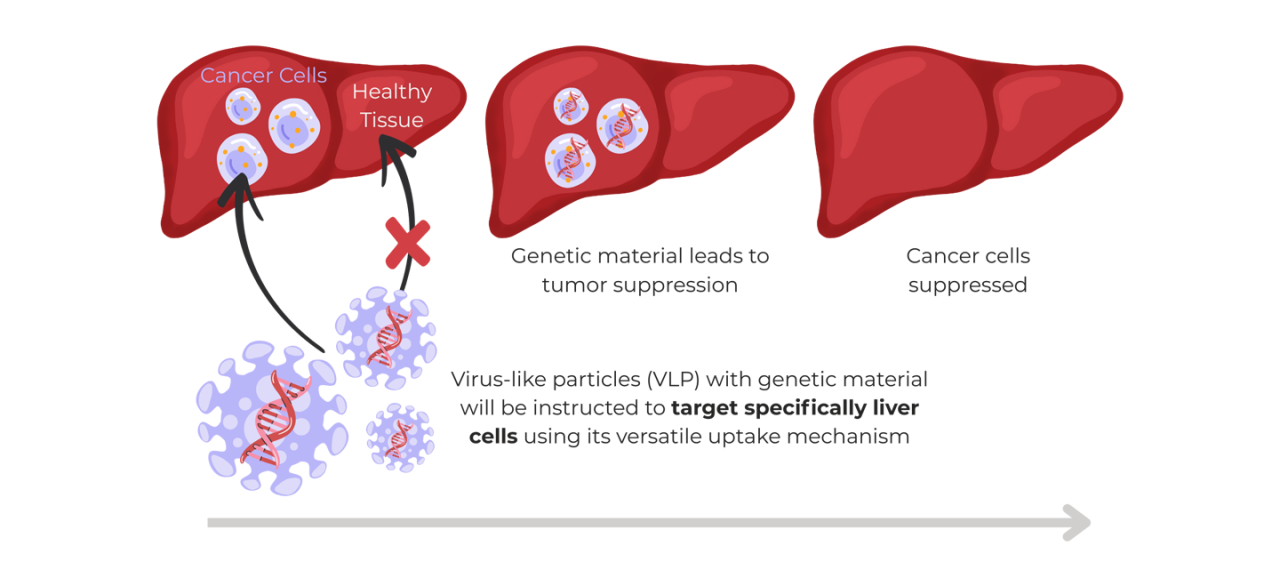
Lisbon, Portugal, May 6, 2025 – Hovione, an international integrated pharmaceutical development and manufacturing organization, and Firstgene Life Sciences, a portfolio company of the Swiss incubator Xlife Sciences AG (SIX:XLS), today announced a strategic collaboration to advance Hovione’s proprietary virus-like particle drug delivery platform for the targeted treatment of Hepatocellular Carcinoma (HCC), a therapeutic indication developed by Firstgene.

Under the terms of the collaboration, Hovione will grant Firstgene an exclusive license to its proprietary novel targeted Adeno-Associated Virus (AAV)-Like particle technology for the treatment of HCC and will provide preclinical R&D services. 

The virus-like particle technology will be engineered and functionalized for the specific carcinoma cell type using therapeutically validated AAVs, including a novel primer compound. Hovione will be responsible for molecular engineering, the supply of tailor-made virus-like particles, and the execution of proof-of-concept studies.

“We are thrilled to see our new gene vector particle platform adopted by Firstgene and its forward-thinking leadership team,” said Dr. Jean-Luc Herbeaux, Chief Executive Officer of Hovione. “We are proud to advance the development of innovative oncology treatments that address a critical unmet need for precision gene expression at the tissue level. This partnership is a testament to our mission of turning scientific complexity into real-world solutions that truly make a difference for patients.”

“Firstgene is proud to highlight its collaboration with Hovione on this groundbreaking project. HCC, the most common liver cancer and a leading cause of cancer-related death, continues to represent a major unmet medical need. The combination of Hovione’s expertise in complex chemistry and particle engineering and the commercialization expertise of Xlife Sciences positions Firstgene well to offer patients potential new safe and effective therapy options”, said Dr. Alexander Zink, Managing Director of Firstgene Life Sciences GmbH.


About Hovione 
Hovione is an international company with over 60 years of experience in pharmaceutical development and manufacturing operations. As a Contract Development and Manufacturing Organization (CDMO) it has a fully integrated offering of services for drug substances, drug product intermediates and drug products. The company has four FDA inspected sites in the USA, Portugal, Ireland and China and development laboratories in Lisbon, Portugal and New Jersey, USA. Hovione provides pharmaceutical customers services for the development and compliant manufacture of innovative drugs, including highly potent compounds, and customized product solutions across the entire drug life cycle. In the inhalation area, Hovione offers a complete range of services, from API, formulation development and manufacturing, capsule filling and devices. Hovione's culture is based on innovation, quality and dependability. Hovione is a member of Rx-360, EFCG and participates actively in industry quality improvement initiatives to lead new global industry standards.

About Firstgene
Firstgene Life Sciences GmbH is a technology-driven biotech start-up located in Mainz, Germany, incubated by Xlife Sciences AG, Zürich, Switzerland. Firstgene aims to deliver innovative treatments for indications with a high unmet medical need and is backed by Xlife Sciences AG, whose expertise is bridging novel innovation to the health care markets. 


Also in the Press Room

See All

The company is building out more than 200,000 square feet of space in New Jersey. In April, Contract Pharma had the opportunity to tour Hovione’s expanded manufacturing facility in East Windsor, NJ. The company is planning a formal ribbon-cutting this fall; before that, we got an inside look at some new features. Having established United States operations in 2002, Hovione now has more than 200,000 square feet of space in New Jersey. This will be developed into a large, integrated campus in the next five to ten years. Overall, the company’s recent NJ expansion, which began in 2025, has tripled its total spray-drying capacity in the U.S. Future Facility Upgrades A 125,000-square-foot greenfield acquired by Hovione at the East Windsor campus will eventually be a large-scale production site. This includes enhanced quality control and R&D capabilities. Together, all this adds to Hovione’s stable of manufacturing sites, R&D centers, and other offices spread across three continents. Key to the expansion is a targeted reduction of Hovione’s carbon footprint by 40% by the year 2030. Part of this goal is embracing new and/or changing solvent types to help meet sustainability standards. Additionally, the company says automation that has been put in place at its Portugal site will be replicated in NJ. Hovione Aligns NJ Operations At the Drug, Chemical & Associated Technologies Association (DCAT) Week in New York in March, Contract Pharma met with Hovione. There, David Basile, Vice President of Technical Operations—Americas, further illustrated the New Jersey expansion. “Hovione aims to build an equivalent manufacturing network, where clients can go to any site across the globe,” Basile said. “The design of the facility has been well-thought through with material flows [and] gravity-fed processes. It’s scalable. We call each one of these building segments a finger. You can copy and paste these fingers, and they are built to house both spray drying and drug product assets.” Ultimately, with these moves and a strategic partnership model, Hovione aims to provide customers an opportunity to co-invest and access the company’s proprietary knowledge and assets to accelerate programs and create long-term value. Read the full article at ContractPharma.com    

Press Clipping

Hovione Planning Ribbon-Cutting at NJ Facility – A Behind-the-Scenes Preview

Jul 31, 2026

The podcast "The Next Discovery" is a six-episode series created by Observador, a leading Portuguese digital newspaper and radio station, in partnership with Hovione.   From hospitals to patients’ homes, discover the solutions that make it possible to administer high-dose biologics with greater comfort, less pain, and more freedom in treatment. What if some of the scientific breakthroughs that could improve the lives of millions of people were happening right now in Portugal? The Next Discovery. Listen to the last episode of the podcast here, featuring João Pires and Joana Cristóvão from Hovione’s Research and Development Center. [English transcription] Nelson Ferreira (NF): Welcome to the sixth and final episode of The Next Discovery, a podcast series in which Hovione opens the doors to its world to share the global impact of innovation developed in Portugal. I’m Nelson Ferreira, and throughout this journey we have explored chemical processes, ultrafine particles, and revolutionary production lines. Today, we look directly at the future of medicine. After exploring the world of small molecules, we are now entering a new therapeutic dimension: biologic medicines. Based on larger and more complex molecules, these treatments are opening new possibilities for addressing a wide range of diseases. To explain how this field is evolving and how science can make these treatments more effective, stable, and accessible to patients, I’m joined by João Pires and Joana Cristóvão from Hovione’s Research and Development Center. NF: Welcome to you both. João, let me start with you. For someone who has never heard this term before, what exactly are biologic medicines, and what sets them apart from small-molecule drugs, which are more closely associated with traditional chemistry? João Pires (JP): If we think about the medicines we find in pharmacies today, most of them are indeed composed of small molecules. These are simpler structures that are still highly effective and that we can design and manufacture through what we call classical chemistry, a field that has developed its knowledge over the last 150 to 200 years. Biologics are completely different. Because of their complexity, larger size, and structure, they differ mainly in their origin. They are produced from living organisms, such as cells, which, under the right conditions, can function as biological factories. Just as in our own bodies, they allow us to produce and extract substances that can have a significant therapeutic effect for certain diseases. In that sense, biologics benefit from millions of years of evolution, something classical chemistry simply does not have. NF: Biology is what carried out that evolution. JP: Exactly. Biology. That’s part of the beauty of it. NF: Nature carried out that entire process for us. NF: Joana, since these medicines are created from living organisms, can we say they are, in a way, more “intelligent” and have greater therapeutic potential? Joana Cristóvão (JC): In some cases, they do have tremendous therapeutic potential. One of the advantages of these molecules is their remarkable specificity. You can think of it as a key fitting into a lock. It has to be the right key. Biologics, because they speak the same biological language as our bodies, have this advantage. However, that does not mean they are better than small molecules. It means that, because they are produced by living microorganisms, they are highly complex and would be very difficult, and in some cases impossible, to produce through traditional chemical synthesis. Their great strength lies in their specificity. Examples of biologics include proteins that facilitate communication within the body and monoclonal antibodies that identify specific targets. These functions are particularly suited to biologics and less common among small molecules. NF: João, as I understand it, this is still an emerging field worldwide. How did Hovione, a company historically linked to chemical synthesis and small-molecule particle engineering, decide to embrace the challenge of biologics? JP: Honestly, it has been a very natural transition. Over the years, Hovione has developed highly specialized expertise in chemistry, particle engineering, and formulation science. When we look at biologics, despite their greater complexity, the underlying challenge is very similar. These medicines still require materials, processes, and controls to ensure they reach patients safely, consistently, and effectively. NF: But is there real potential? JP: Absolutely. Not only is there potential, but there are also significant challenges. This leads to the second point: curiosity. Throughout Hovione’s history, starting with our founder, there has always been a drive to embrace increasingly complex challenges. That curiosity is part of our DNA, particularly within our Innovation and Development Center. It is also one of the most rewarding aspects of working at Hovione: being part of this transition. NF: And it is not that far removed from Hovione’s history either. JP: Exactly. NF: Joana, in which therapeutic areas have biologics already had the greatest impact? Are there diseases where they have clearly transformed patient treatment? JC: There are several areas. NF: So this is no longer science fiction. It already exists in practice. JC: Exactly, and it has existed for quite some time in some fields. In oncology, for example, antibodies are used to target and kill cancer cells with high specificity. Instead of attacking cells broadly, these treatments target the disease’s underlying mechanisms. NF: Which I assume reduces side effects. JC: It does. Cancer is also a very clever disease. It evolves rapidly and often hides from our immune system. There are biologic therapies designed to help our natural defenses do their job by removing the “invisible cloak” that some tumors use to evade detection and progress rapidly. Another classic example is diabetes. Insulin has been the most common treatment for diabetes for decades. Before biotechnology, insulin was extracted from animals, making production limited. With biotechnology, we gained the ability to produce human insulin, known as recombinant insulin, using living microorganisms. This transformation made the treatment available to far more people and has saved countless lives. NF: Two clear examples where biologics are already making a difference. João, these medicines are on the market today, but I imagine developing and stabilizing them in the laboratory presents major technical challenges. What are they? JP: Because these molecules are highly complex and, as Joana described, quite elegant, they are also extremely sensitive, almost like greenhouse flowers. Biological evolution has optimized them to survive under very specific conditions, conditions that often do not exist during manufacturing, transportation, or administration. As a result, they are highly sensitive to heat, air, pressure, and even prolonged contact with one another. When these molecules interact too much, they can lose their structure and unfortunately their therapeutic effect as well. This is where we come in. Clients often approach us with molecules that have tremendous therapeutic potential but are still only proof-of-concept projects. Our role is to take those early experimental results and develop the controls, processes, and formulations needed to scale production to thousands or even millions of doses while maintaining impeccable quality and stability. NF: Joana, how are these medicines administered? Are they different from conventional drugs? Traditionally, many biologics require intravenous administration in a hospital setting. Is that still the case? JC: Traditionally, yes. Most biologics are administered directly into a vein through an infusion, similar to receiving an IV drip. However, the pharmaceutical industry is not only focused on treating diseases. It is also increasingly focused on the patient experience. These treatments require hospital visits and can take time to administer. For chronic illnesses, this process repeats throughout a patient's life. The industry's goal is to develop alternative treatments that are more comfortable and give patients greater independence. NF: So they would no longer need to go to the hospital. JC: Exactly. The ultimate objective is to create injectable solutions that patients can administer themselves. Achieving this requires innovation in technology, formulation development, and medical devices. NF: João, this is where high-concentration formulations come in. What does that mean in practice? Could we eventually administer these medicines ourselves without the help of a nurse? JP: We certainly hope so. The concept of high-concentration formulations is relatively simple: fitting as much medicine as possible into the smallest possible volume. Ideally, that volume is small enough to fit into something like an auto-injector that can be carried in a pocket. NF: A pen-like device. JP: Exactly, a pen. Thanks to newer treatments, particularly in areas such as obesity, these devices have become much more familiar to the public. Technically, it sounds simple: more medicine, less liquid. But as we discussed earlier, these molecules are highly sensitive. As concentration increases and the molecules become more crowded together, challenges emerge. In addition to stability concerns, there is the issue of viscosity. This is easy to visualize: the more concentrated something is, the thicker it becomes. NF: Which makes it harder to inject. JP: Exactly. And greater viscosity generally means greater pain during administration. That directly contradicts the goal of developing treatments that are more convenient and patient-friendly. This is one of the major challenges facing the industry today: finding ways to overcome dose limitations and reduce administration volumes without compromising therapeutic effectiveness, convenience, or patient acceptance. NF: Joana, before we finish, what do scientists feel when they look toward the future and see Hovione’s work helping bring medicine closer to solutions that are increasingly personalized, convenient, patient-centered, and comfortable? JC: I think it is a tremendous responsibility, and that responsibility is also a major source of motivation. Medicine is becoming increasingly personalized and focused on the biological mechanisms that cause disease rather than simply treating symptoms. It is incredibly rewarding to be part of teams contributing to this journey toward a better future, one that places patients at the center. NF: João, is the future biological? JP: Not exclusively, but certainly in part. Biologics allow us to dream bigger. They open the door to better, more personalized, and more effective medicines, creating possibilities that were difficult to imagine until now. NF: João Pires and Joana Cristóvão, thank you for opening the doors to the future of medicine. With this look toward tomorrow, we conclude the first season of The Next Discovery. Over the course of six episodes, we traveled from a basement laboratory in Lisbon in 1959 to global technological leadership that now touches the lives of more than 80 million people every year. These conversations have shown that with curiosity, rigor, and talent, the next great scientific breakthroughs can indeed bear the signature of our country. To listen to all episodes of this series, visit observador.pt or your favorite podcast platforms. Until the next discovery.

Article

Podcast “The Next Discovery” (EP6) - High-Dose Biologics: From Fiction to Reality

Jul 23, 2026