Press Room

Press Clipping / Mar 29, 2021

Ireland: Over 60 companies sign up to BITCI’s new Low Carbon Pledge

And commit to setting science-based carbon emission reduction targets

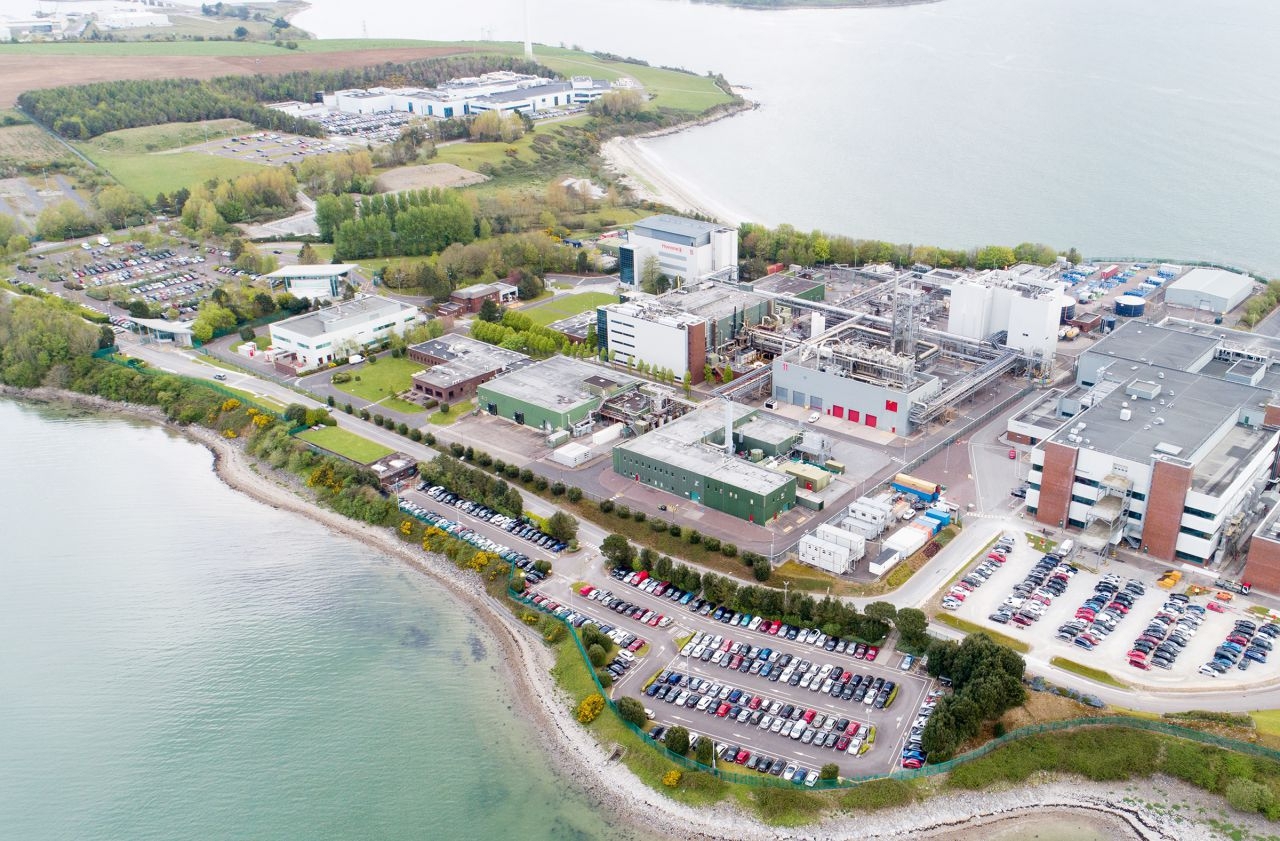
Manufacturing Site Ringaskiddy Cork Ireland BITCI | Hovione

Over 60 of the largest companies in Ireland have publicly committed to set targets based on science by 2024. They are the first signatories of Business in the Community Ireland’s new Low Carbon Pledge.

Business in the Community Ireland, the national network for sustainability, created the initial Low Carbon Pledge in 2018 with the aim of being a starting point for their member companies to commit to cutting their carbon footprint, report annually on their progress and develop a credible roadmap towards a net-zero economy.

The new Low Carbon Pledge now calls on businesses to set science-based carbon emission reduction targets no later than 2024 (i.e. what science says is necessary to limit global warming to 1.5°C).

The 61 signatories are: A&L Goodbody, Abbvie, ABP Foods, Accenture, Actavo, AIB, ALDI, Allianz, An Post, Arup, Aviva, Bank of Ireland, Bidvest Noonan, Boots, Britvic, BT Ireland, Cairn Homes, Cisco, Cook Medical, Dawn Meats, Deloitte, DePuy Synthes, Diageo, Dublin Bus, EirGrid, Enterprise-Rent-a-Car, ESB, Fujitsu, Gas Networks Ireland, Grant Thornton, HEINEKEN Ireland, Hovione Ireland, Irish Rail, Irish Distillers, Irish Water, Janssen, Johnson & Johnson Vision Care, KBC Bank, Keelings, KPMG, Lidl, M&S, Momentum Support, Mercury Engineering, Musgrave, Ornua, Permanent TSB, PM Group, PwC, RTÉ, Sky, Sodexo, SSE, Tesco, Three Ireland, Ulster Bank, Verizon, Veolia, Virgin Media Ireland, Vodafone and William Fry.

The 61 signatory companies will commit to:

  • Record their entire carbon footprint, both direct (Scope 1 & 2) and indirect (Scope 3) emissions
  • Reduce emissions that they are directly responsible for (Scope 1 & 2), as well as play their part in reducing emissions across their Supply Chain (Scope 3)
  • Report individually through an annual report or website or other publicly available equivalent source and collectively through an Annual Business in the Community Ireland Low Carbon Report
  • As our understanding improves, signatory companies are asked to commit to regularly Reviewing their carbon reduction targets to align to the latest climate science.

Minister for Communications, Climate Action & Environment, Eamon Ryan T.D. welcomed the announcement and commented, “As COP26 approaches, we must accelerate our climate response across our economy and society. I commend Business in the Community Ireland on this collective action especially as it brings together companies from different sectors and at different levels of maturity on their decarbonization journey. A low carbon economy is imperative for our post-pandemic recovery as it will support our long-term competitiveness, job creation and social cohesion.”

The key strength of the Pledge lies in the collaborative platform which enables signatory companies to learn from each other’s successes and challenges. By working collectively, the Low Carbon Pledge movement builds capacity, fosters innovation and drives the ambition in delivering the changes needed.

Tomás Sercovich, CEO, Business in the Community Ireland (BITCI), said, “With yesterday’s publication of the Climate Action Bill which commits Ireland to be a net-zero carbon State by 2050, the role of business in reaching this target is vitalInvestors, regulators, consumers, suppliers and employees expect business to lead the net-zero vision we all aspire. Transparency and accountability are fundamental for the change to happen. The Low Carbon Pledge is a clear demonstration of businesses driving towards decarbonization, creating the business models, innovation and jobs for a low carbon future. As more businesses join this Pledge, we will use our collective voice to drive the new systems thinking we need to overcome this fundamental challenge.”


Also in the Press Room

See All

The podcast "The Next Discovery" is a six-episode series created by Observador, a leading portuguese digital newspaper and radio station, in partnership with Hovione. And what if some of the scientific discoveries that can improve the lives of millions of people were happening right now in Portugal? The Next Discovery. Listen to the first episode of the podcast here, featuring Diane Villax, co-founder of Hovione. [English transcription] Welcome to The Next Discovery. This is a series of conversations, created in partnership between Observador Lab and Hovione, an international pharmaceutical company of Portuguese origin, that will open the doors to its world and share real stories of science, innovation and global impact. Over six episodes, we will meet the people behind technologies that help develop and manufacture innovative medicines for the world’s largest pharmaceutical companies that improve the lives of more than 80 million patients every year. I am Nelson Ferreira and, in this first episode, we will discover how an unlikely story, which began in a basement in Lisbon, became a story of global leadership. To talk about this legacy, I have the honour of welcoming Diane Villax, co-founder and non-executive board member of Hovione, who at the age of 91 remains a living witness to this journey. Nelson Ferreira (NF): Welcome, Mrs Diane Villax. Let us begin our conversation in 1959. Hovione was born in an unlikely way, in a basement in Lisbon, founded by your husband, Ivan Villax, by you and by two other partners. How did you manage family life and, at the same time, the birth of a pharmaceutical company, all in the same space? I imagine that created some interesting logistical challenges. Diane Villax (DV): From the beginning, we decided that we would manufacture raw materials for the pharmaceutical industry, that is, the active ingredients of medicines. We had no money, so it had to start from our home, which was in a residential neighborhood in Lisbon. Right from the start, we divided the tasks. My husband, a brilliant Hungarian chemical engineer, would be the inventor, the producer and the salesman, while I would take care of all the administrative side: imports, exports, accounting and banks. I kept those responsibilities for at least 30 years. At the same time, we also thought about the values that would guide us over this long period: transparency, innovation, the pursuit of excellence and great consideration for everyone who would come to work with us over the years. NF: Very early on, your husband made it clear that Hovione would not compete on low price, but rather on quality and on solving complex problems. What was it like to apply this principle of rigour when resources were still scarce? Especially because, from day one, it always seems to me that your objective was global. The world would be your market. DV: From the beginning, we felt that Portugal, with a population of 10 million people, would not be a very significant market, and that the world would be ours. Perhaps we were a little naïve, because we were entering a global market that was already quite sophisticated. But the decision was made and we moved forward. We moved forward and were fortunate that Japan discovered us quite quickly. They came knocking on our door, because of course we did not have the means to knock on theirs. At that time, they did not manufacture; they only formulated, so they needed to buy raw materials. My husband had invention patents for independent processes and there were long discussions. They felt that our technology was good, our IP was very robust and our quality was excellent. This led to a cooperation that lasted 10 or 15 years and was very profitable for both sides, I believe. NF: In the 1980s and 1990s, Hovione took a more significant leap forward. What were the decisions, the technological bets or even the moments of greatest courage that allowed this small Portuguese company to become a leading multinational? DV: In 1982, after a successful inspection by the FDA, the regulatory authority in the United States of America, we entered the American market with our generic doxycycline antibiotic. The inventor’s patent had already expired and we had an independent manufacturing process. It was a huge, demanding and competitive market, but one that respects good service and quality. And it was indeed a major leap, because the market was so large that we had no real sense of what it would mean, and demand was much greater than what we were able to produce. I remember, it must have been the summer of 1983, many people probably had to postpone their holidays to the autumn or winter, because missing delivery deadlines was not an option. Later, in the 1990s, we entered a new business area: services. We realized that large American pharmaceutical companies, as well as small biotechs, were increasingly inclined to outsource the development work for new molecules. This is a very long period, which can take four, six or even 10 years — the development process for new molecules before they are approved by regulators and become commercial products. So we began to offer this development service, and it went very well. From there, we developed new technologies, such as spray drying, for poorly soluble molecules, because this could greatly increase their bioavailability. Today, this services area is our largest business segment. NF: Hovione today works with 19 of the world’s 20 largest pharmaceutical companies. How do you maintain the agile, pioneering spirit that was born in that basement, when today the company has 2,600 employees, more than 300 scientists, and has even become the largest private employer of PhDs in Portugal? DV: Agility has to be maintained. For example, during the pandemic, we suddenly received large, unexpected orders to manufacture a component of Remdesivir, which was the product authorized to help Covid patients. So agility has to be maintained, and we always maintain our quality. Today, with more than 60 years of history, clients come to us because they know they can count on our quality and on our responsibility to produce and deliver on time what they order. NF: There is another impressive figure here. Your products reach 80 million people every year and Hovione participates in up to 10% of the new medicines approved annually by the FDA in the United States. When you look at this impact, do you feel that the dream of 1959 has been fully achieved? DV: I think it has been far exceeded. When we founded Hovione, my husband, who was a scientist, simply wanted to have his own laboratory. But he never imagined that we would develop in such a way that, today, we are sought out by major international pharmaceutical companies, which frequently come to us. NF: This is a series about science, but it is also about people. And the rigour, ethics and long-term vision that Diane always brought to management are still present at Hovione. What message would you leave to the scientists who join Hovione today with the mission of finding the next discovery? From what I understand, Diane makes a point of welcoming them whenever they join the company. DV: Yes. Four times a year, twice in English and twice in Portuguese, I speak to the newcomers at Hovione, giving them a very brief account of our journey, our values, our objectives, our dreams, the challenges we faced and how we overcame them to get to where we are today. And I always recommend that anyone who joins this company must work with passion. They must work with passion and always remember that our work is to produce medicines for those who need them. We have the privilege of serving patients. We are a company that works for society. I think “In it for life”, which is our motto, has a lot to do with us, because we have been here for 67 years as a family company, and that is how we intend to continue for many good years to come. Above all, in the healthcare sector, there is a great advantage, because we can look at the long term. We do not have to think about stock market results every quarter, as public companies do. And, on the other hand, we are here precisely to give life to those who need it. “In it for life.” NF: At the age of 91, how does Diane herself maintain this passion and continue to make long-term plans? DV: Because I was a founder of this company. I see it progressing and developing successfully, so it is a joy for me. And I have a large family coming after me. I have six grandchildren and seven great-grandchildren, and I hope to leave the company to them so that they can continue it as I managed it. NF: That is truly inspiring. Mrs Diane Villax, thank you very much for sharing the memories and inspiration of this legacy, which remains very much alive. It was a privilege. This was the first chapter of The Next Discovery. In the coming weeks, we will continue to open the doors of Hovione to discover how Portuguese talent is leading the world, from complex chemistry to particle engineering, from respiratory therapies to next-generation biological medicines.   You can listen to the next episodes on observador.pt and on your usual podcast platform.    

Article

Podcast “The Next Discovery” (EP1) - From a basement in Lisbon to global impact

Jun 18, 2026

Hovione is bringing momentum to the intranasal field after announcing that its lead single-use nasal dry powder device, developed in collaboration with Industrial Design Consultancy Ltd (IDC), is now available for commercial partnerships. The milestone marks the transition from prototype to a fully integrated intranasal drug delivery platform that spans Hovione’s end-to-end partnership capabilities–from API synthesis through advanced formulation and particle engineering to drug product manufacturing, including device supply and advanced analytical tools for nasal performance characterization. The platform’s single-use device is designed to be manufacturable at scale and to leverage existing advanced particle engineering and drug product manufacturing capabilities, a practical advantage that can shorten timelines to clinic and commercialization while reducing development risk and cost. The device’s patented mechanism supports targeted nasal deposition, including access to the upper olfactory region. This enables rapid systemic absorption and potential nose-to-brain delivery pathways that are increasingly important for CNS and emergency-use indications. Beyond the single-use format, Hovione and IDC are advancing a multi-dose variant to broaden applicability across dosing regimens and therapeutic areas. The collaboration is backed by an intellectual property portfolio and initial patent grants, positioning the platform as a turnkey option for pharma partners seeking a single integrated supplier for both drug substance and device. This development arrives as intranasal delivery gains traction for systemic, CNS and rapid-onset therapies. This is precisely the focus of the upcoming 4th Nasal Formulation & Delivery Summit, for which Hovione is a key sponsor. The annual summit unites formulation, delivery and product development leaders to tackle drug-device compatibility, translational preclinical models, and strategies for scalable, regulatory-ready intranasal programs. Hovione’s recent progress will be highly relevant to attendees looking to de-risk nose-to-brain and systemic intranasal programs. Read the full article at News-Medical.net    

Press Clipping

Hovione advances intranasal drug delivery with commercial-ready dry powder platform ahead of 4th Nasal Formulation & Delivery Summit

Jun 01, 2026