Press Room

Article / Apr 02, 2026

Simplifying continuous operations: lowering the barrier to faster development

Manufacturing Chemist, 2 April 2026

Continuous Tableting at Hovione

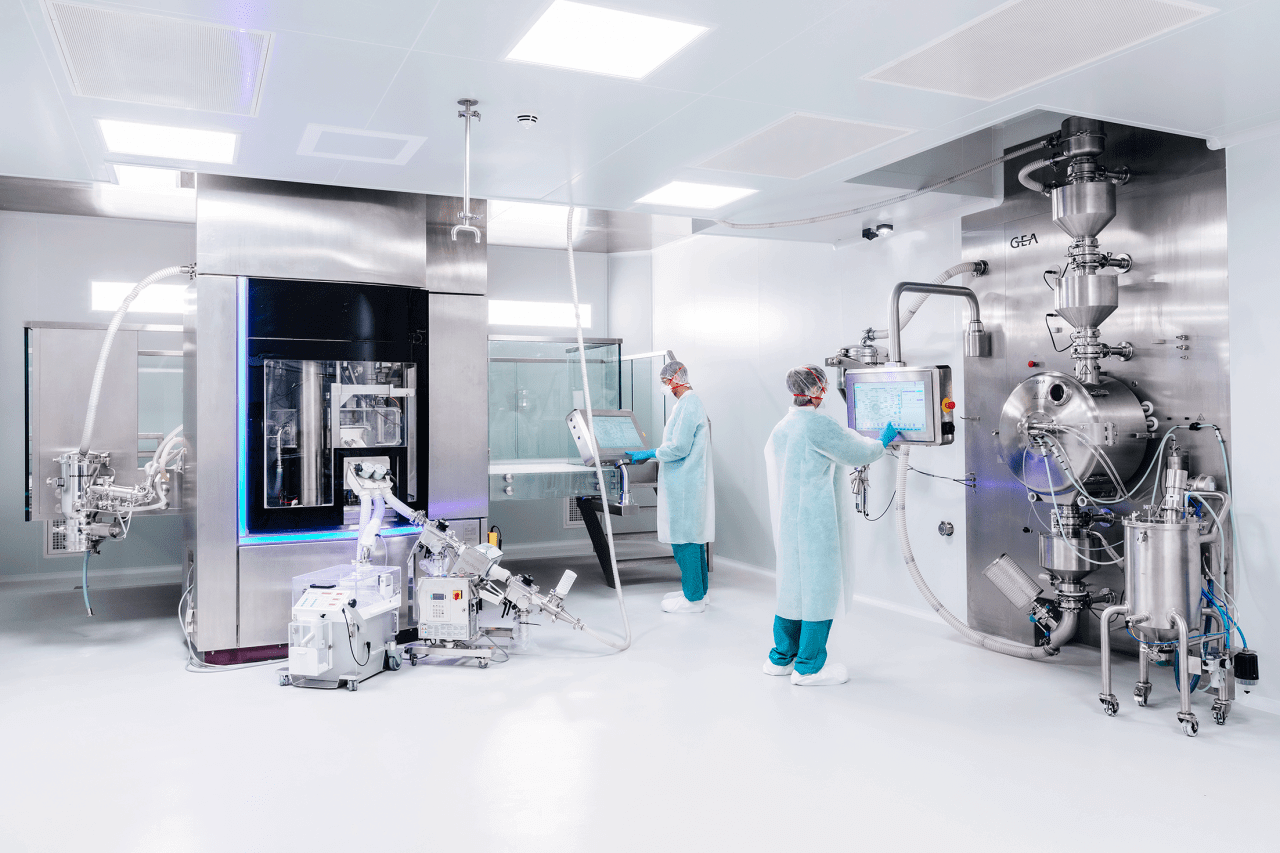
Continuous Tableting at Hovione´s facility in Portugal. (Photo: Hovione)

Continuous manufacturing has long promised faster development, improved process understanding and, in the absence of scale-up, smoother commercialization. For many pharmaceutical R&D teams, those benefits are well understood. What still holds them back, however, is not scepticism about the concept; it’s the perceived effort required to implement it

To increase the adoption of continuous manufacturing, particularly for tablet compression applications, GEA and Hovione have been working together to overcome these hurdles and demonstrate how solutions such as SimpleCT can accelerate development, provide greater flexibility and simplify production. Manufacturing Chemist spoke to Anthony Tantuccio (pictured), Fellow Scientist, Continuous Tableting/Technology Intensification at Hovione, to find out more. 

Simplifying continuous operations: lowering the barrier to faster development

Continuous manufacturing (CM) solutions can accelerate product development, reduce costs, improve operational economics and make production more agile with less downtime. With advanced controls and tightly linked process data to product output, it enables more consistent tablet quality. “It’s a more efficient and flexible mode of manufacturing,” notes Tantuccio, “offering consistent and reliable tablet production with fewer operators and less waste of precious active pharmaceutical ingredients (APIs) and raw materials.”

“Yet,” he adds, “running a continuous direct compression (CDC) line during development can often be a daunting task.” Any inherent complexity stems from managing parallel, integrated operations that all occur at the same time (as opposed to a single unit operation). “Even relatively straightforward duties — such as collecting samples, changing process conditions or running Residence Time Distribution (RTD) tests — can become multi-person activities with a high potential for error.”

SimpleCT focuses on simplifying these development-critical tasks, not by removing flexibility but by embedding automation, structure and guidance directly into the equipment and control systems. The result is a toolset designed for how R&D teams develop continuous tableting — mapping a design space and generating calibration samples within a single run — while reducing manual co-ordination and increasing confidence in the data generated. “Rather than treating continuous development as a scaled-down version of commercial manufacturing,” explains Tantuccio, “SimpleCT recognises that development has different priorities: rapid learning, efficient experimentation and robust process insight.”

Accelerating development cycles and time to market

One of the most immediate benefits of SimpleCT for R&D teams is speed. Development programmes on continuous lines can be significantly shortened when routine yet complex tasks are automated and synchronised across the system. “During many development scenarios,” says Tantuccio, “Design of Experiments (DoE) execution remains largely manual and labour-intensive — introducing inefficiencies, safety risks and data variability at a time when consistency and speed are paramount.”

Tools such as assisted DoE (ADoE) allow development steps to be predefined and executed automatically. Instead of manually adjusting dozens of parameters under time pressure, operators can progress through experimental conditions in a controlled and repeatable way. This reduces the setup time between experiments and minimises the risk of incorrect parameter entries or missed steps.
“Shorter development cycles translate directly into faster decision-making and earlier progression to clinical or commercial stages,” adds Tantuccio: “Even a modest reduction in development time — measured in weeks or months — can have a meaningful impact on time-to-market and overall project value. Furthermore, unrealised capacity can become available.”

Speed alone is not enough, though; R&D teams also need confidence in their understanding of the process. SimpleCT enhances operational insight by improving how information is presented and captured during development. More detailed screens, clearer alarm messages and time-aligned datasets help operators to understand not just that something has happened … but why it happened.

At the core of SimpleCT is the ability to define and execute multivariate experiments within clearly defined operating ranges by a single person.

Reducing reliance on specialised personnel

Traditional continuous development often assumes the availability of highly experienced operators or process engineers who can manage simultaneous set-point changes, sampling schedules, data alignment and troubleshooting in real-time. In practice, this creates a bottleneck: development becomes dependent on a small number of experts.

“SimpleCT is designed to lower that dependency,” suggests Tantuccio. “Automated sampling systems, guided workflows and more informative operator interfaces allow development activities to be done by fewer people with less reliance on niche expertise. For example, automated tablet sampling systems can collect, bag, label and link samples to their respective process conditions at high frequency without manual coordination and management.”

Similarly, automated residence mass collection enables system measurement of how much material is present in the blender during steady operation — a standard requirement for understanding mixing behaviour — and time-aligned data capture at the touch of a button. Tasks that previously required multiple operators working closely together can now be performed safely and consistently by a single trained user. “This reduction in headcount pressure is particularly valuable in R&D environments when resources are limited and teams are balancing multiple programmes simultaneously,” Tantuccio adds.

Improving process insight during development

Manual “spiking” operations have historically posed safety and operational concerns. Spiking involves adding a tracer powder to the process and monitoring its passage through the system, enabling mapping of residence time and identification of key process dynamic behaviour.

These activities frequently require operators to work in proximity to moving equipment and APIs, sometimes under time pressure. Clear communication between the operators responsible for spiking, sample collection and human–machine interface (HMI) adjustments is essential, yet even minor misalignments can compromise data integrity or create safety risks. “As the number of experimental runs increases, so too does the likelihood of human error, mislabelling or incomplete data capture,” comments Tantuccio.

Automated RTD tools, such as contained automatic spiking (CAS) systems, ensure accurate timing, consistent spike introduction and full time-alignment between process data and experimental events. This removes a common source of uncertainty in RTD studies and allows teams to focus on interpreting results rather than questioning data quality. “By reducing manual steps and human error, SimpleCT supports smoother experimentation and faster learning — enabling teams to identify operating windows, sensitivities and transfer risks earlier in development.”

A pragmatic path to continuous adoption

“Importantly,” enthuses Tantuccio, “SimpleCT is not positioned as a radical departure from existing development practices. It is a pragmatic, application-based enabler for teams that already see the value of CM but have hesitated because of its perceived operational complexity.”

The SimpleCT toolset integrates across GEA’s continuous ecosystem — including CDC and related technologies. This lowers the psychological and operational barrier to entry, making continuous development feel manageable rather than overwhelming. “For many pharmaceutical organisations, this derisking effect is just as important as speed or efficiency. By simplifying day-to-day development activities, SimpleCT allows teams to build confidence in continuous tableting early, thereby creating a stronger foundation for later development stages and commercialisation,” Tantuccio adds.

From complexity to confidence

The take-home message from Tantuccio is that continuous manufacturing doesn’t need to be complicated to be powerful. “For R&D teams, the real challenge has never been understanding the theory; it’s been managing the practical realities of development on integrated, all-at-once and always-on systems.” By removing manual handling and co-ordination from critical development steps, SimpleCT from GEA and Hovione delivers tangible benefits in three key areas: reliability, ease of operation and data assurance. Automation minimises the risk of human error for standardised workflows, whereas push-button execution allows complex multivariate experiments to be done efficiently and safely.

The quality and consistency of the data generated provide a strong foundation for process understanding, supporting faster decision-making and more robust commercialization activities. By automating complex tasks, reducing headcount requirements and improving process insights, SimpleCT enables faster, more confident development on continuous lines. “For teams ready to move beyond batch — but looking for a simpler way forward — continuous has just become easier,” concludes Tantuccio. “With SimpleCT, you can take the complexity out of continuous development and get to market even faster.” 

SimpleCT: accelerating time-to-market

In an increasingly competitive landscape, the ability to develop and optimise tablet formulations quickly can provide a decisive advantage. Part of GEA’s ConsiGma® portfolio, SimpleCT supports the faster development of direct compression products, reduces material consumption during experimentation and shortens overall time-to-market. At the same time, improved operator safety and reduced exposure to APIs align with the industry’s ongoing focus on sustainable and responsible manufacturing practices.

Read the full article at ManufacturingChemist.com


Also in the Press Room

See All

The podcast "The Next Discovery" is a six-episode series created by Observador, a leading Portuguese digital newspaper and radio station, in partnership with Hovione. From hard-to-produce antibiotics to innovative therapies, Hovione uses complex and sustainable chemistry to bring safe medicines to patients around the world. What if some of the scientific discoveries that could improve the lives of millions of people were happening right now in Portugal? “The Next Discovery.” Listen to the second episode of the podcast here, featuring Rui Loureiro, scientist at Hovione. [English transcription] From hard-to-produce antibiotics to innovative therapies, Hovione uses complex and sustainable chemistry to bring safe medicines to patients around the world. What if some of the scientific discoveries that could improve the lives of millions of people were happening right now in Portugal? “The Next Discovery.” Nelson Ferreira (NF): Welcome to the podcast “The Next Discovery.” This is a partnership between Rádio Observador and Hovione—a six-episode series where we open the doors of a Portuguese-founded multinational pharmaceutical company to share real stories of science, innovation, and global impact. I am Nelson Ferreira, and in the first episode we explored the story of the basement where it all began more than 65 years ago. Today, we will understand what happens inside this company. We will talk about complex chemistry, because that is where the journey of many medicines that pass through Hovione begins. We will discover how laboratory science becomes industrial processes, how sustainability is part of this transformation, and how all of this contributes to producing medicines that truly help improve and save lives. To guide us on this journey, I am joined today by Rui Loureiro, a scientist at Hovione’s Research and Development Center. Hello, Rui. Welcome to Rádio Observador. NF: Rui, most people may never have heard of Hovione, but they may be taking a medicine where Hovione played an important role. Where exactly do you fit into this long journey that takes a medicine to the patient? Rui Loureiro (RL): Hello, Nelson, good morning—and thank you for the question. The path for a medicine to reach a patient is long. It starts with producing a very small amount of a drug, which through development eventually needs to be produced in kilograms. Let me give an example. Imagine baking cookies. When you buy cookies at the supermarket, someone first made the initial batch at home—but then they needed a partner to scale those cookies to an industrial level. NF: A factory, exactly. RL: Exactly. That is where Hovione comes in. We are that partner for the pharmaceutical industry—helping turn one cookie into many cookies that eventually reach patients. NF: For those listening who are not familiar with this field, people often talk about APIs in the pharmaceutical industry. I had to look it up myself. What is it, and why has Hovione focused so much on it since early on? RL: API can mean different things depending on the field—for example, in IT it means something entirely different. In the pharmaceutical industry, API stands for Active Pharmaceutical Ingredient. In Portuguese, princípio ativo—the component that treats or cures the disease. Using the cookie analogy again: a chocolate cookie has many ingredients—but the chocolate is what defines it. The API is exactly that in a medicine: a small but essential part that delivers the therapeutic effect. Even though tablets contain multiple substances, producing something like a 10 mg tablet of the active ingredient alone is difficult—so other components are added to create the final form. NF: Over many years, Hovione also specialized in complex generics. How did that experience help you move into working with companies developing entirely new medicines? RL: That was a very important step. Developing complex generics means the chemistry required is challenging—it may involve very low temperatures or tightly controlled conditions to ensure we produce the desired result and not something unwanted. Those early capabilities—developing antibiotics and other materials—led the market to recognize Hovione’s expertise. Ultimately, chemistry involves combining building blocks. If someone proves they can assemble the most complex ones, the industry will take notice. That is how we became recognized as a trusted partner for complex pharmaceuticals. NF: I am curious about this idea of “complex chemistry.” You often compare chemistry to cooking—what distinguishes traditional chemistry from the complex chemistry you do at Hovione? RL: Let me simplify for clarity. Complex chemistry depends on the reagents and solvents used. The starting materials may be difficult to transform and may require very specific conditions. The resulting product may also be unstable and require careful handling. Using cooking as an analogy: simple chemistry is like making jelly—you mix powder with hot water and let it set. Complex chemistry is more like making ice cream—it involves a more intricate process, and many people prefer to leave it to specialists. NF: Another fascinating challenge: in the lab, you work at milligram or gram scale, but factories must produce tons. How do you scale from a teaspoon to a truckload without ruining the recipe? RL: That is indeed our biggest daily challenge. Scaling up requires understanding every variable in the process. Going from a small kitchen setup to industrial production is not just about bigger equipment—it requires entirely different systems and expertise. We work with multidisciplinary teams—chemists, engineers, analytical specialists—to control every variable that affects product quality. In a typical GMP (Good Manufacturing Practice) process, there are 4–5 main steps. And across those steps, we may need to control around 350 variables to ensure the final product meets quality standards for patients. NF: When people think of chemistry, they often think of something negative. But Hovione has been developing more sustainable approaches. What does sustainable chemistry mean in practice? RL: Sustainability is a daily priority. We design processes with sustainability in mind from the very beginning. We follow green chemistry principles—avoiding harmful reagents whenever possible. And when that is not possible, we apply the “four Rs”: reduce, reuse, recycle, and recover. For example, just as the paint industry moved from solvent-based to water-based systems, we are also moving toward chemistry in water. This reduces the carbon footprint of our processes. We are also exploring micellar chemistry, flow chemistry, and even reactions without solvents at all—similar to grinding ingredients together with a mortar and pestle. These approaches help reduce waste and improve efficiency. NF: Looking to the future—will chemistry remain our best tool to save lives, and in a more sustainable way? RL: Absolutely. That is what motivates me every day. Artificial intelligence is already helping identify targets and design molecules—but those molecules still need to be produced. That is where chemistry remains essential. It is the foundation for creating and improving medicines. Innovation and sustainability will go hand in hand—and that is the path we are committed to. NF: Rui Loureiro, thank you for helping simplify chemistry and for showing this more sustainable side of science. This was the second episode of “The Next Discovery.” In the coming weeks, we will continue exploring this world. In the next episode, we will look at the future of particle engineering.   You can listen to the next episodes on observador.pt and on your usual podcast platform. See you at the next discovery.      

Article

Podcast “The Next Discovery” (EP2) - Complex chemistry, real impact

Jun 25, 2026

The podcast "The Next Discovery" is a six-episode series created by Observador, a leading Portuguese digital newspaper and radio station, in partnership with Hovione. And what if some of the scientific discoveries that can improve the lives of millions of people were happening right now in Portugal? The Next Discovery. Listen to the first episode of the podcast here, featuring Diane Villax, co-founder of Hovione. [English transcription] Welcome to The Next Discovery. This is a series of conversations, created in partnership between Observador Lab and Hovione, an international pharmaceutical company of Portuguese origin, that will open the doors to its world and share real stories of science, innovation and global impact. Over six episodes, we will meet the people behind technologies that help develop and manufacture innovative medicines for the world’s largest pharmaceutical companies that improve the lives of more than 80 million patients every year. I am Nelson Ferreira and, in this first episode, we will discover how an unlikely story, which began in a basement in Lisbon, became a story of global leadership. To talk about this legacy, I have the honour of welcoming Diane Villax, co-founder and non-executive board member of Hovione, who at the age of 91 remains a living witness to this journey. Nelson Ferreira (NF): Welcome, Mrs Diane Villax. Let us begin our conversation in 1959. Hovione was born in an unlikely way, in a basement in Lisbon, founded by your husband, Ivan Villax, by you and by two other partners. How did you manage family life and, at the same time, the birth of a pharmaceutical company, all in the same space? I imagine that created some interesting logistical challenges. Diane Villax (DV): From the beginning, we decided that we would manufacture raw materials for the pharmaceutical industry, that is, the active ingredients of medicines. We had no money, so it had to start from our home, which was in a residential neighborhood in Lisbon. Right from the start, we divided the tasks. My husband, a brilliant Hungarian chemical engineer, would be the inventor, the producer and the salesman, while I would take care of all the administrative side: imports, exports, accounting and banks. I kept those responsibilities for at least 30 years. At the same time, we also thought about the values that would guide us over this long period: transparency, innovation, the pursuit of excellence and great consideration for everyone who would come to work with us over the years. NF: Very early on, your husband made it clear that Hovione would not compete on low price, but rather on quality and on solving complex problems. What was it like to apply this principle of rigour when resources were still scarce? Especially because, from day one, it always seems to me that your objective was global. The world would be your market. DV: From the beginning, we felt that Portugal, with a population of 10 million people, would not be a very significant market, and that the world would be ours. Perhaps we were a little naïve, because we were entering a global market that was already quite sophisticated. But the decision was made and we moved forward. We moved forward and were fortunate that Japan discovered us quite quickly. They came knocking on our door, because of course we did not have the means to knock on theirs. At that time, they did not manufacture; they only formulated, so they needed to buy raw materials. My husband had invention patents for independent processes and there were long discussions. They felt that our technology was good, our IP was very robust and our quality was excellent. This led to a cooperation that lasted 10 or 15 years and was very profitable for both sides, I believe. NF: In the 1980s and 1990s, Hovione took a more significant leap forward. What were the decisions, the technological bets or even the moments of greatest courage that allowed this small Portuguese company to become a leading multinational? DV: In 1982, after a successful inspection by the FDA, the regulatory authority in the United States of America, we entered the American market with our generic doxycycline antibiotic. The inventor’s patent had already expired and we had an independent manufacturing process. It was a huge, demanding and competitive market, but one that respects good service and quality. And it was indeed a major leap, because the market was so large that we had no real sense of what it would mean, and demand was much greater than what we were able to produce. I remember, it must have been the summer of 1983, many people probably had to postpone their holidays to the autumn or winter, because missing delivery deadlines was not an option. Later, in the 1990s, we entered a new business area: services. We realized that large American pharmaceutical companies, as well as small biotechs, were increasingly inclined to outsource the development work for new molecules. This is a very long period, which can take four, six or even 10 years — the development process for new molecules before they are approved by regulators and become commercial products. So we began to offer this development service, and it went very well. From there, we developed new technologies, such as spray drying, for poorly soluble molecules, because this could greatly increase their bioavailability. Today, this services area is our largest business segment. NF: Hovione today works with 19 of the world’s 20 largest pharmaceutical companies. How do you maintain the agile, pioneering spirit that was born in that basement, when today the company has 2,600 employees, more than 300 scientists, and has even become the largest private employer of PhDs in Portugal? DV: Agility has to be maintained. For example, during the pandemic, we suddenly received large, unexpected orders to manufacture a component of Remdesivir, which was the product authorized to help Covid patients. So agility has to be maintained, and we always maintain our quality. Today, with more than 60 years of history, clients come to us because they know they can count on our quality and on our responsibility to produce and deliver on time what they order. NF: There is another impressive figure here. Your products reach 80 million people every year and Hovione participates in up to 10% of the new medicines approved annually by the FDA in the United States. When you look at this impact, do you feel that the dream of 1959 has been fully achieved? DV: I think it has been far exceeded. When we founded Hovione, my husband, who was a scientist, simply wanted to have his own laboratory. But he never imagined that we would develop in such a way that, today, we are sought out by major international pharmaceutical companies, which frequently come to us. NF: This is a series about science, but it is also about people. And the rigour, ethics and long-term vision that Diane always brought to management are still present at Hovione. What message would you leave to the scientists who join Hovione today with the mission of finding the next discovery? From what I understand, Diane makes a point of welcoming them whenever they join the company. DV: Yes. Four times a year, twice in English and twice in Portuguese, I speak to the newcomers at Hovione, giving them a very brief account of our journey, our values, our objectives, our dreams, the challenges we faced and how we overcame them to get to where we are today. And I always recommend that anyone who joins this company must work with passion. They must work with passion and always remember that our work is to produce medicines for those who need them. We have the privilege of serving patients. We are a company that works for society. I think “In it for life”, which is our motto, has a lot to do with us, because we have been here for 67 years as a family company, and that is how we intend to continue for many good years to come. Above all, in the healthcare sector, there is a great advantage, because we can look at the long term. We do not have to think about stock market results every quarter, as public companies do. And, on the other hand, we are here precisely to give life to those who need it. “In it for life.” NF: At the age of 91, how does Diane herself maintain this passion and continue to make long-term plans? DV: Because I was a founder of this company. I see it progressing and developing successfully, so it is a joy for me. And I have a large family coming after me. I have six grandchildren and seven great-grandchildren, and I hope to leave the company to them so that they can continue it as I managed it. NF: That is truly inspiring. Mrs Diane Villax, thank you very much for sharing the memories and inspiration of this legacy, which remains very much alive. It was a privilege. This was the first chapter of The Next Discovery. In the coming weeks, we will continue to open the doors of Hovione to discover how Portuguese talent is leading the world, from complex chemistry to particle engineering, from respiratory therapies to next-generation biological medicines.   You can listen to the next episodes on observador.pt and on your usual podcast platform.    

Article

Podcast “The Next Discovery” (EP1) - From a basement in Lisbon to global impact

Jun 18, 2026

Hovione is bringing momentum to the intranasal field after announcing that its lead single-use nasal dry powder device, developed in collaboration with Industrial Design Consultancy Ltd (IDC), is now available for commercial partnerships. The milestone marks the transition from prototype to a fully integrated intranasal drug delivery platform that spans Hovione’s end-to-end partnership capabilities–from API synthesis through advanced formulation and particle engineering to drug product manufacturing, including device supply and advanced analytical tools for nasal performance characterization. The platform’s single-use device is designed to be manufacturable at scale and to leverage existing advanced particle engineering and drug product manufacturing capabilities, a practical advantage that can shorten timelines to clinic and commercialization while reducing development risk and cost. The device’s patented mechanism supports targeted nasal deposition, including access to the upper olfactory region. This enables rapid systemic absorption and potential nose-to-brain delivery pathways that are increasingly important for CNS and emergency-use indications. Beyond the single-use format, Hovione and IDC are advancing a multi-dose variant to broaden applicability across dosing regimens and therapeutic areas. The collaboration is backed by an intellectual property portfolio and initial patent grants, positioning the platform as a turnkey option for pharma partners seeking a single integrated supplier for both drug substance and device. This development arrives as intranasal delivery gains traction for systemic, CNS and rapid-onset therapies. This is precisely the focus of the upcoming 4th Nasal Formulation & Delivery Summit, for which Hovione is a key sponsor. The annual summit unites formulation, delivery and product development leaders to tackle drug-device compatibility, translational preclinical models, and strategies for scalable, regulatory-ready intranasal programs. Hovione’s recent progress will be highly relevant to attendees looking to de-risk nose-to-brain and systemic intranasal programs. Read the full article at News-Medical.net    

Press Clipping

Hovione advances intranasal drug delivery with commercial-ready dry powder platform ahead of 4th Nasal Formulation & Delivery Summit

Jun 01, 2026