
 Google Chrome
 Safari
 Firefox
 Edge
Edge
As the European Commission prepares a new pharmaceutical strategy, manufacturers seek financial support and technology investment
by Rick Mullin
NOVEMBER 27, 2020 | APPEARED IN VOLUME 98, ISSUE 46
When the COVID-19 pandemic exposed weaknesses in the pharmaceutical supply chain in the US—in particular its dependence on products outsourced to Asia—the government responded forcefully. The Trump administration led with an initial grant of $354 million, with a possible $458 million to follow, for a newly formed company, Phlow, dedicated to manufacturing critical active pharmaceutical ingredients (APIs) domestically.
Next came a letter of intent for a $765 million loan to Eastman Kodak to convert a specialty chemical plant at the company’s headquarters in Rochester, New York, into an API manufacturing complex dedicated to “reshoring” pharmaceutical chemicals from China and India.
Now it’s Europe’s turn. The European Commission (EC) has been studying the global supply chain, setting itself a year-end deadline for delivering a drug and health-care strategy. Proposed road maps solicited by the EC from manufacturers of APIs and finished drugs illustrate differences between the US approach and Europe’s possible path to self-sufficiency in pharmaceutical manufacturing.
In a meeting in April with the European Union conference of presidents, the EU’s health and food safety commissioner, Stella Kyriakides, raised the matter of supply chain vulnerabilities exposed by the COVID-19 pandemic. Kyriakides cited “structural weaknesses in the EU’s medicines supply chain and a high dependence on non-EU countries for active pharmaceutical ingredients” and recommended that supply chain issues be addressed in an EU strategy. The EC solicited public comment on the proposed strategy in June.
Judging from the recommendations put forward by European associations representing drug and pharmaceutical chemical firms, the commission’s approach will differ significantly from the tack taken by the outgoing Trump administration. Rather than spending millions of euros launching made-in-Europe ventures, the EC will likely leverage a sizable established manufacturing base. Likewise, industry guidance for Europe’s plan places greater emphasis on making its supply chain more secure rather than less global, while maintaining and expanding the region’s manufacturing footprint.
Adrian van den Hoven, general director of Medicines for Europe, an association of generic-drug and API makers, stresses that reshoring cannot be viewed as simply resuming the manufacture of products that have been outsourced to China and India. “It’s a question of making it sustainable to invest and continue to invest in Europe,” van den Hoven says. “We still have a pretty robust industrial footprint in Europe, with a lot of capabilities.” But growth has flattened in recent years, he adds, as manufacturers in countries like India have taken market share.
Medicines for Europe’s proposals to the EC include a change to generic-drug pricing, which individual countries currently set at the lowest possible levels to reduce the cost of subsidized health care. The association proposes a scheme that would allow prices to be negotiated from the bottom up based on a supplier’s cost of goods, regulatory costs, and other considerations.
For hospital and retail purchases, van der Hoven says Medicines for Europe favors “multi-winner tenders,” in which buyers are required to purchase from several suppliers as opposed to awarding contracts to the lowest bidder, a practice that has fueled consolidation among drug suppliers.
The group also advocates government support for technology development. Van den Hoven points to Europe’s almost $900 billion COVID-19 recovery package, “The commission has made it clear that some of the funding will be available for technology investment by our sector,” he says.
Medicines for Europe also advocates global coordination of drug supply as opposed to rampant reshoring. “It is important that we maintain critical technologies in Europe,” van den Hoven says. “That said, we don’t believe we can or should produce everything in Europe.”
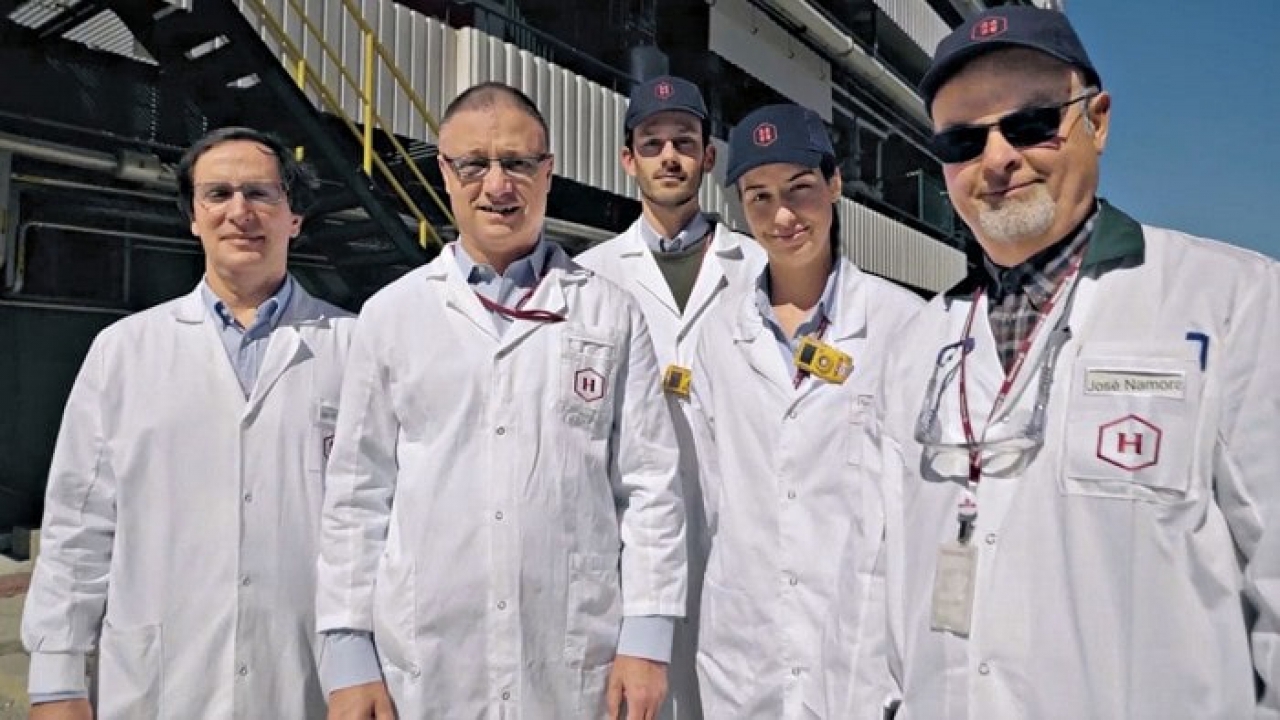
That view is seconded by Luis Gomes, senior vice president of operations at the Portuguese API firm Hovione. He’s also chairman of the Pharmaceutical Activities Committee of the European Fine Chemicals Group (EFCG), an industry association.
“I think the commission has an understanding that it needs to strengthen the production of pharma products in Europe in order to reduce the dependence and vulnerability of the supply chain,” Gomes says. “I think regulators need a kind of road map to pursue what I would call meaningful pharmaceutical production reshoring in Europe. That starts with priorities.”
The EC must arrive at a list of critical APIs that need to be manufactured in Europe, Gomes says. Those no longer made in Europe can be reintroduced, thus increasing the domestic manufacturing base. “And it’s not only APIs one cares about,” he says. “You are also dependent on supply of intermediates and building blocks. You need to look at the supply chain from an end-to-end perspective.”
Pharmaceutical chemistry presents a significant hurdle given that many of the reactions involved have disappeared from Europe in the wake of the region’s Registration, Evaluation, Authorisation and Restriction of Chemicals (REACH) legislation and other environmental tightening over the past 2 decades. For example, REACH required expensive environmental controls on reactions such as nitration, fluorination, and bromination, which are critical to making certain drug ingredients. “I think REACH created an incentive for production of these chemicals to move to other places, especially Asia, but that doesn’t mean they cannot be manufactured again in Europe,” Gomes says.
Like Medicines for Europe, EFCG sees a need for the government to invest in green technology. Financial support will also be needed to establish European production of critical drugs and drug ingredients now made exclusively overseas.
Maggie Saykali, director of resins and fine chemicals at the European Chemical Industry Council (Cefic), says in an email that her trade association also has been in discussions with the EC regarding vulnerabilities in the pharmaceutical supply chain. Cefic is preparing a report with recommendations at the commission’s request.
“One of the pillars of our roadmap is selective reshoring of the critical technologies needed for the molecules for which long-term supplies must be guaranteed,” Saykali writes. “In order to be sustainable in the long run, this selective reshoring needs support for process innovation, expansion of existing EU production facilities and enforcement of a level playing field for the highest-quality safety, environmental, and social standards.”
Sources agree that continuous manufacturing technology will play a role in developing efficient and green manufacturing. They also agree that the Research Center of Pharmaceutical Engineering’s Center for Continuous Flow Synthesis and Processing (CC Flow) initiative at Graz University is the center of continuous technology development in Europe.
C. Oliver Kappe, scientific director of CC Flow, says that his lab is not communicating directly with the EC on the development of a reshoring strategy but that several of its partners are contract manufacturers and members of associations such as EFCG. Kappe says the lab plans to set up a facility near Graz, Austria, that will pilot the manufacture of both APIs and finished drugs in a fully continuous fashion.
Continuous manufacturing could help avert crises such as drug shortages during pandemics in Europe, Kappe argues. He notes that CC Flow has worked on a process for manufacturing remdesivir, a COVID-19 treatment developed by Gilead Sciences. It also has collaborated with a similar center in the US, the Medicines for All Institute at Virginia Commonwealth University. Medicines for All is a partner in Phlow, the company launched by the Trump administration to repatriate generic drugs.
While Europe has taken a few pages from the US response to the COVID-19 pandemic—the EU recently announced it would create a biomedical research agency comparable to the Biomedical Advanced Research and Development Authority, the US government agency that launched Phlow—the European path will inevitably differ. Observers note that Brussels is coordinating 27 independent countries’ efforts, ensuring a more protracted process than experienced in Washington.
One EU country has floated a Phlow-like venture with a view toward securing domestic supply of acetaminophen. The government of France is sponsoring a partnership with the French drug firms Sanofi and Upsa and the French API maker Seqens to establish domestic supply of the analgesic, which currently comes mostly from China. Seqens manufactures bulk acetaminophen there. Upsa and Sanofi manufacture most of the finished drug used in France, but they source API from China. The plan, still at a preliminary stage, would have Seqens add capacity for the API in France.
Van den Hoven at Medicines for Europe likes the hospital and health-care-facility purchasing strategy adopted by Phlow and its partner Civica Rx, a nonprofit launched in 2018 to help manage generic-drug prices and prevent shortages for member institutions. But he questions the US government’s decision to spend up to $800 million establishing a new company to foster domestic manufacturing of APIs.
“It’s an incredible amount of money,” he says. “In Europe, we can do it for a lot less.” He points to Sandoz’s deal with the Austrian government to invest more than $175 million at its site in Kundl, Austria, Europe’s last large antibiotics plant. “This is really small change for a production site that supplies half of Europe with penicillin,” van den Hoven says.
On Nov. 25 the EC issued its Pharmaceutical Strategy for Europe, which outlines a raft of initiatives the commission will put forward for approval by the European governing bodies. The strategy, which is not finalized, addresses many of the manufacturing issues raised by industry associations, including pricing policies and investment in green technology. But it lacks details on regulatory changes impacting the use of continuous process manufacturing, and it does not suggest the creation of a list of critical APIs. Van den Hoven says the commission is still fielding input from industry pending a finalized plan.
Europe’s drug manufacturers are awaiting further direction from the EC just as the world braces for a surge in COVID-19 infections that may reignite supply chain anxiety. Van den Hoven notes, however, that the first wave of the pandemic was marked by a cooperative response globally. For instance, Europe expedited the export of drugs used in intensive care units to the US despite crisis-level demand for the same drugs at home, he says.
“The political climate is a little tense right now,” van den Hoven says. “But at some point people are going to have to go back to cooperation again.”
Read the full article on C&EN website
